China Signs Multi-Billion-Dollar Contracts With Turkmen Firms, But Leaves Financing Unclear
- Andrej Botka
- 7 мая
- 3 мин. чтения

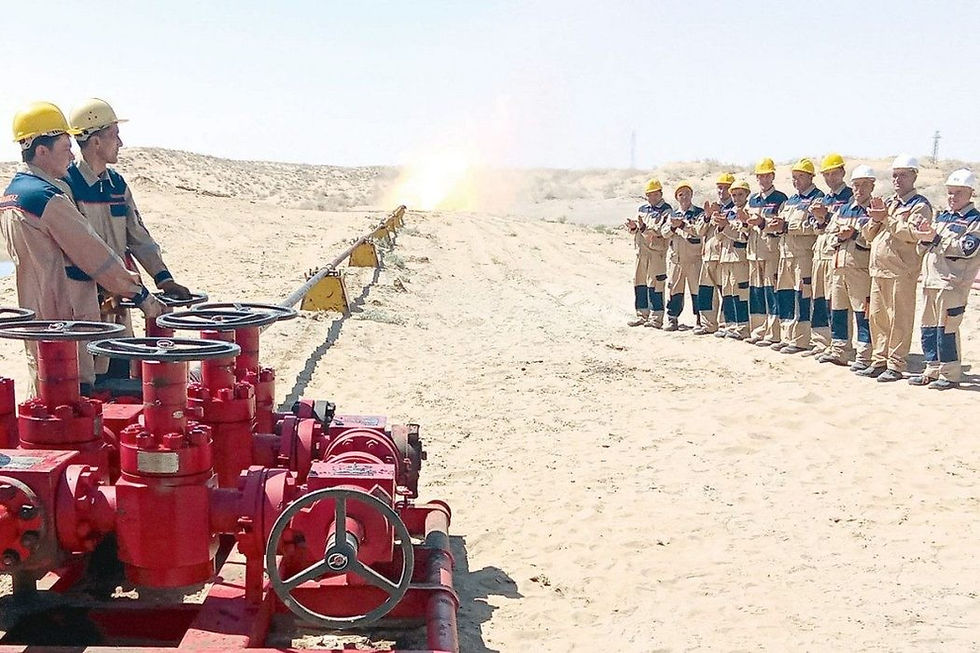
Turkmen state media say Chinese companies have agreed to projects worth several billion dollars in Ashgabat, but documents and officials have so far not identified who will bankroll the work. The largest headline deal — an arrangement valued at about $4.6 billion — was announced this month with a Chinese engineering unit, yet the announcement offered no clear financing plan, leaving investors and market-watchers asking how the contracts will be implemented.
Local outlets reported that Chinese industrial groups have pitched a series of manufacturing ventures to Turkmen authorities, ranging from a plant to produce magnesium alloys to a factory for polycarbonate plastics used in electronics and medical devices. Another proposal would lay the groundwork for a fast-rail connection across the country. Turkmen official statements were terse and gave few details on investment terms, timelines or whether Beijing or private Chinese lenders will provide loans or guarantees.
Across Central Asia, transport and trade moves are also accelerating. Operators from Kazakhstan, Turkey, China and several European states agreed to speed up freight transit across the Caspian by cutting paper-based tracking and streamlining procedures, a change designed to move roughly six hundred container trains from China through Kazakhstan this year. In Kazakhstan itself, officials marked the start of a nearly $587 million expansion at the Khorgos border logistics hub even as the facility continues to face accusations of corruption and smuggling; customs data show close to 85,000 cars passed through Khorgos in the first quarter, a jump equal to about one out of every eight vehicles compared with the same period last year.
Chinese commercial ties are shaping economies beyond transport. Automakers from the PRC are gaining ground in Kazakhstan, where Chinese models are expected to make up about two-fifths of the market this year, and firms have struck new distribution agreements with local dealers. Beijing-backed projects are also shifting agricultural patterns: in one province that historically focused on rice, farmers are switching to corn to meet demand from Chinese buyers. Chinese investors have additionally announced plans for disease-free seed potato labs and other agri-tech ventures in the region.
Smaller Central Asian states report a mix of infrastructure and industrial offers from Chinese firms. In Kyrgyzstan, construction began this spring on a roughly $260 million renewable project and talks continue on a package of energy and infrastructure works totaling about $1 billion. Bishkek officials also say a program lined up with partners in China's Shandong province would install some 250 production lines to boost small and medium manufacturing, though officials acknowledged the plan currently looks aspirational and lacks detailed financing and execution schedules.
Security and education ties are deepening in other corners of Central Asia. Authorities in Tajikistan’s mountainous east held meetings with Chinese prefectural police on cross-border security cooperation even as a string of violent incidents along the border has heightened concern. And in Uzbekistan, Tashkent State Transport University signed up with a Chinese polytechnic to launch joint undergraduate programs in vehicle and aviation engineering, including drones. Analysts say the flurry of contracts and memoranda shows growing Chinese commercial ambition in the region, but they warn that without transparent funding commitments and clear procurement terms, many announced projects risk stalling or remaining paper promises. A Eurasia trade expert suggested that some Chinese firms may be seeking permits and preferential access first, hoping to lock in projects before formalizing who pays for them.



Комментарии