Hungary’s Leadership Change Puts Central Asian Energy And Investment Links In Question

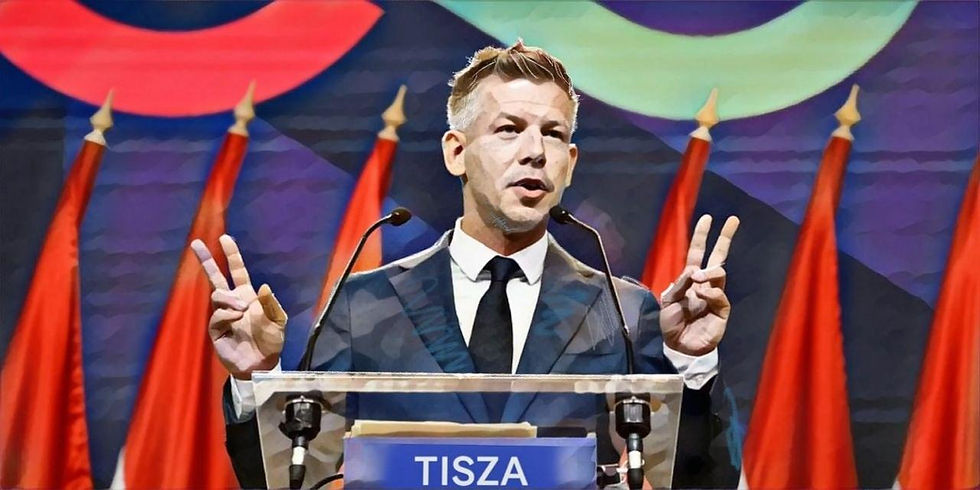
Hungary’s incoming prime minister, Péter Magyar, has inherited more than a change of government — he has taken charge of a foreign-policy agenda that deepened ties with Central Asia over the past decade. Governments and businesses from Kazakhstan to Turkmenistan are watching closely to see whether Budapest will preserve the trade, transport and energy agreements built under Viktor Orbán or take a different course.
Under Orbán, Budapest accelerated outreach to resource-rich Central Asian states as part of a strategy to lessen reliance on Moscow for oil and gas. Hungarian officials publicly emphasized long-term engagement with the region and cultivated personal ties with its leaders, while signing formal pacts and launching joint economic initiatives intended to lock in supply and investment links beyond Europe.
Those initiatives have produced measurable results. Hungary and Kazakhstan established a strategic partnership in 2014 and created a business council and an agricultural direct-investment vehicle. Bilateral trade neared $200 million in 2024, and in the first eight months of 2025 it climbed by about one-fifth to top $164.6 million. Hungarian capital in Kazakhstan has passed $370 million, and a pipeline of some 16 projects now totals roughly $700 million in engineering, farming and logistics. Officials have also pushed to expand east–west corridors across the Caspian, offering Budapest indirect access to Central Asian energy and freight flows.
Relations with Uzbekistan and Turkmenistan also deepened. President Shavkat Mirziyoyev met with Orbán in Budapest in May 2025 and officials cited a combined investment pipeline in the neighborhood of $500 million. Hungarian lender OTP entered Uzbekistan’s banking sector in 2023 by acquiring about three-quarters of Ipoteka Bank, making it a principal shareholder of the nation’s fifth-largest retail bank. Hungary opened talks with Ashgabat years earlier about integrating Turkmen gas into European supply routes, framing the effort as part of broader security considerations.
Energy-sector ties have practical touchpoints that could be vulnerable to political change. Hungary’s MOL Group has expanded cooperation with Kazakhstan’s state company KMG, including a joint venture at a field in western Kazakhstan and framework arrangements for crude deliveries to Hungary. The initial shipment under that arrangement left the Black Sea port of Novorossiysk in August 2025, moved to Croatia and then flowed north via the Adria pipeline — a route designed to avoid transiting Russian territory. Oil-market analysts caution that a new government typically reorganizes state-linked firms, and Budapest’s leadership swap could bring personnel and strategic shifts at MOL that affect existing contracts.
Most regional analysts expect continuity rather than rupture. In interviews, Central Asian specialists pointed out that Astana and other capitals usually adopt a pragmatic stance when partners change in Europe. One Kazakhstan-based analyst said the new Hungarian leader comes from established political circles and is likely to pursue steady relations rather than dramatic reversals. Magyar has publicly indicated he intends to keep pragmatic ties with neighbors and major suppliers, but until new ministers and corporate boards are named, governments in Central Asia will be waiting for concrete signs on whether pipelines, investment projects and trade channels will continue without interruption.


Комментарии