Watchdog Finds Central Asia Fuels Russia’s Workarounds To Western Controls

Central Asian countries have become a major pathway for goods and money rerouted into Russia to blunt the impact of Western restrictions, according to a new study by a Washington, D.C.-based policy group. The Center for Global Civic and Political Strategies says logistical networks and financial corridors in Kazakhstan, Kyrgyzstan and Uzbekistan helped divert items and payments that could be used in Moscow’s military program, and that these flows intensified in recent years before some have since declined.
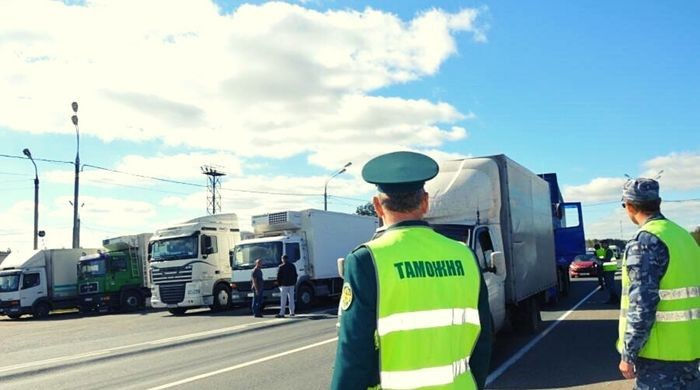
The report documents rising shipments of priority-controlled industrial items — from electrical components to precision bearings and automated tools — moving from Central Asia into Russia. Investigators found that trade rules inside the Eurasian trade bloc and long, lightly policed borders make it easier to reclassify imported Western-made hardware as civilian goods in one country and then move them into Russia under local paperwork. In several cases, exports that arrived as ordinary commercial deliveries were later transformed on paper into permissible intra-bloc shipments.
Kazakhstan stands out in the paper: the volume of listed priority goods routed to Russia jumped by more than fourfold in 2022, a sign of coordinated diversion using shared transport and minimal oversight, the authors say. Since then, those exports have dropped sharply. Kazakh officials reject accusations of deliberate assistance, and the report stops short of blaming the government, instead pointing to structural weaknesses — treaty-based trade arrangements and a continuous frontier — that traffickers can exploit. Several Kazakhstan-linked companies have, meanwhile, faced Western penalties in recent years.
Kyrgyzstan is singled out for the role some of its financial firms and digital platforms played in moving money tied to procurement activity. The study highlights Kyrgyz-registered cryptocurrency services as possible transit points for Russian-linked capital, and notes that U.S., European and British authorities identified enough risk last year to impose sanctions on a handful of banks and on one exchange identified by regulators. In April, the European Union added measures aimed at preventing circumvention of sanctions by restricting some state-linked avenues of finance. A sanctions analyst who reviewed the report said regulators are increasingly focused on the financial plumbing, not just the trucks and shipping manifests.
In the South Caucasus, the researchers flagged Georgia as a major transit and re-export risk and described Azerbaijan as a logistics node for the north–south route connecting Russia with Iran and markets farther south. The paper urges Western governments to shift more monitoring capacity to these geographic bottlenecks and to widen enforcement to include intermediary service providers — insurers, corporate advisers and banks — that help conceal or legitimize questionable transfers. The authors argue that hitting those support services can raise the risk and cost for networks that attempt to disguise military-related procurement.
The study’s findings underscore a larger enforcement challenge: states can deny intentional wrongdoing while their legal frameworks and infrastructure create openings for bad actors. Strengthening customs checks, improving cross-border data sharing and pressing providers of corporate and financial services to step up due diligence would narrow those openings, the report’s authors say. Still, they add, doing that will require sustained diplomatic pressure and resources from Western capitals if the flow of diverted goods and funds is to be curtailed.


Комментарии