Armenia’s Westward Tilt Spurs Moscow To Court Tashkent As EAEU Faces Uncertainty
- Andrej Botka
- Jun 4
- 3 min read

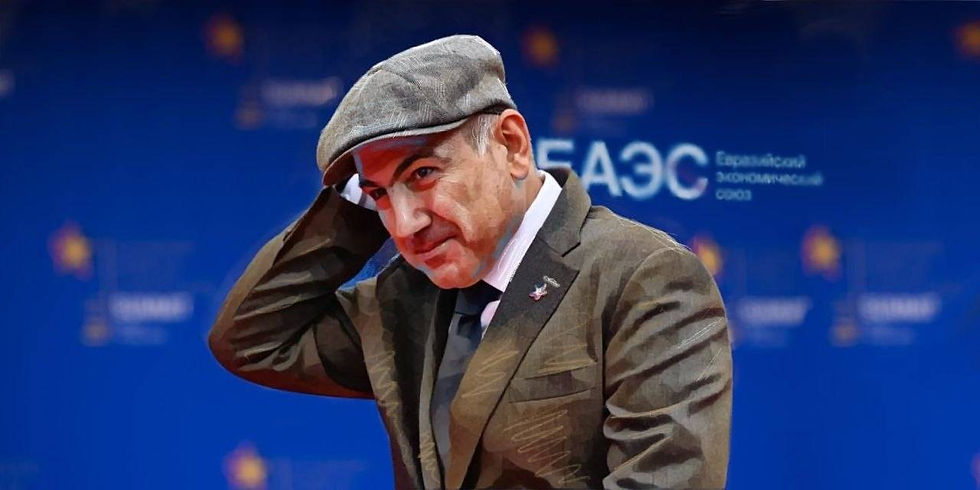
As ties between Yerevan and Moscow fray, leaders of the Eurasian Economic Union pressed Armenia this week to make a clear choice between closer links with the European Union and continued membership in the bloc, raising the prospect that the organization’s membership and direction could shift in the months ahead. At an expanded meeting in Astana, officials from Kazakhstan, Belarus, Russia and Kyrgyzstan asked Armenian authorities to state whether they intend to pursue EU integration or stay inside the EAEU, and said a report on the consequences of suspending Armenia’s treaty participation will be presented at the union’s supreme council meeting set for December 2026. Within 24 hours of the summit, Moscow recalled its ambassador to Yerevan for consultations — a diplomatic move seen by observers as a clear expression of displeasure.
Russian President Vladimir Putin used the gathering to underscore his view that aligning with European regulatory regimes would clash with Eurasian integration, especially in areas such as agriculture and industry, and warned that deepening ties with the EU would make joint membership impractical and force Moscow to scale back economic cooperation. Analysts say the tone was meant to signal long-term strategic concern rather than an immediate cut-off. “This is a warning shot aimed at shaping Armenia’s trajectory after the vote,” said Mikhail Ivanov, a Moscow-based foreign policy analyst. “Pulling the ambassador sends a message to both elites and voters — but it’s also calibrated to avoid a full diplomatic rupture.”
Those developments come as Prime Minister Nikol Pashinyan readies his party for parliamentary elections and continues to emphasize restoring ties with neighbors, portraying such moves as central to a renewal of Armenia’s foreign policy. Domestic polling released ahead of the vote suggests Pashinyan’s Civil Contract could capture roughly two-thirds of decided voters, a margin that would hand his party a strong parliamentary majority and bolster his mandate. Internationally, the prime minister has also received public endorsements from some Western and U.S. figures, underscoring the geopolitical tug of war now playing out over Yerevan’s future alignment.
While Moscow turns up the pressure on Armenia, it appears to be cultivating a closer relationship with Uzbekistan — a country that currently sits in the EAEU as an observer. Uzbek President Shavkat Mirziyoyev took part in the Astana meeting and described expanding practical cooperation with member states as a core priority of his economic diplomacy. He proposed creating a coordinated digital trade environment across the union, aimed at harmonizing rules for online commerce, customs operations, sanitary and veterinary controls, certification of origin, and the mutual acceptance of electronic documents. He also raised labor mobility, suggesting a linked digital gateway for national employment services that would give citizens access to job listings, migration rules and related information across participating countries.
The Tashkent push matters because labor migration to Russia remains a pillar of Uzbekistan’s economic ties with its northern partner. Large numbers of Uzbek workers are employed in Russia, and remittances continue to be a significant source of foreign income for Uzbekistan. That economic interdependence gives Moscow leverage but also provides Tashkent with incentives to seek smoother trade and mobility arrangements without committing immediately to full membership. “Uzbekistan wants practical benefits more than political binding,” said Leyla Bektasheva, a Central Asia specialist based in Tashkent. “What they’ve outlined is about making everyday commerce and labor movement easier — a step toward integration that stops short of formally joining overnight.”
All of these threads converge on the EAEU’s December meeting, where members will likely weigh Armenia’s status and consider how far to accommodate an increasingly engaged Uzbekistan. If Yerevan opts to deepen ties with Brussels, the union may face a protracted membership dispute. Conversely, should Tashkent move from observer to participant, the bloc would gain a populous and fast-growing economy with its own priorities and calculations. Either scenario would reshape the union’s internal dynamics and prompt capitals across the region to reassess alliances and economic strategies.
For now, the outcome remains unpredictable. Moscow has signaled both readiness to press Armenia and eagerness to boost cooperation with Uzbekistan, while Yerevan appears set on diversifying its external bonds. As diplomats and trade officials prepare for the December session, the EAEU risks entering a period of reorientation — one that could determine whether it tightens into a narrower core or broadens to accommodate new members with different priorities.


Comments