Central Asia Moves From Fixed Water Shares To Big-Build Diplomacy
- Andrej Botka
- Jun 11
- 2 min read

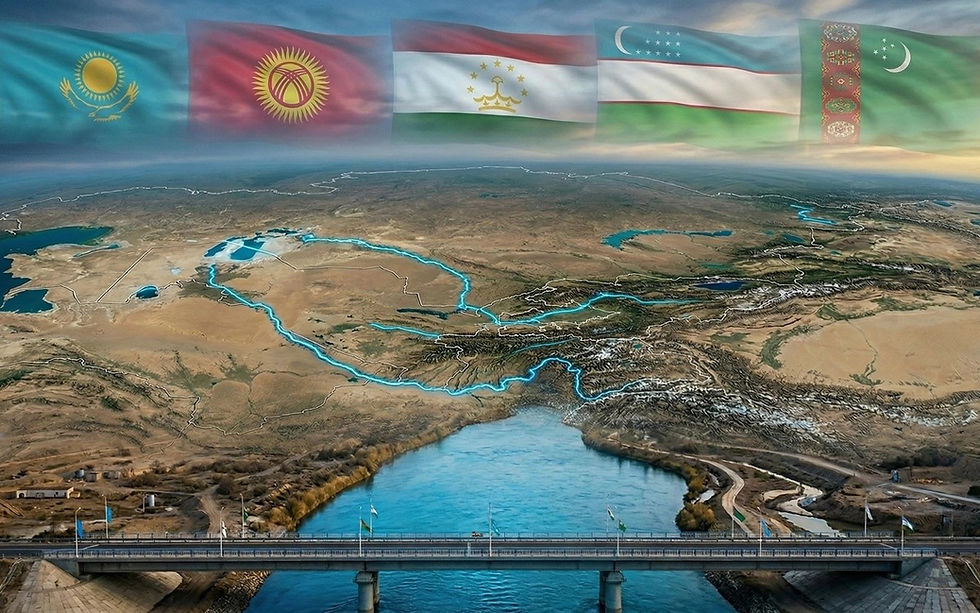
Subheadline: Governments are betting on dams, power links and foreign investment to manage river flows, but farmers and downstream communities face new risks and uncertainties.
For decades, the five nations that share Central Asia’s great rivers relied on a system of predefined water exchanges. Today, officials are turning away from that model and toward large engineering projects and cross-border energy deals to secure supplies. The shift is reshaping negotiations: instead of written allotments, leaders now bargain over reservoirs, hydropower outputs and export contracts—moves that could alter who gets how much water, and when, for years to come.
The historical backdrop helps explain the change. During the Soviet era, authorities coordinated irrigation and energy through centrally set arrangements: upstream highland republics released water in summer while downstream plains supplied fuel in winter. After the Soviet Union dissolved, those arrangements frayed and occasional shortages provoked sharp disputes. Two of the five countries—Kyrgyzstan and Tajikistan—control much of the basin headwaters, and that geographic fact has long driven tension with lower-lying neighbors that depend on steady river flows for crops.
What’s different now is the scale and the financiers. Regional capitals are prioritizing big reservoirs, cross-border transmission lines and modernization of irrigation networks funded by a mix of state budgets, Chinese investment and international lenders. These projects are marketed as ways to stabilize seasonal flows and to create new income streams from electricity sales. A water policy scholar at a regional think tank said leaders see energy exports as a currency that can substitute for fixed water quotas, but warned that infrastructure-led deals shift negotiating power toward those who control construction and financing.
On the ground, the consequences are mixed. Reservoirs can even out water deliveries over a year, but they can also change timing, lowering flows at critical planting moments downstream. Farmers and local irrigation boards report anxiety about later release schedules and the opaque terms of some cross-border energy-for-water arrangements. Community leaders say they rarely get a seat at the table when megaproject contracts are negotiated, raising fears that local needs will be sacrificed for national revenue targets.
External politics complicate matters further. Big lenders and neighbor states now carry greater influence over which projects move ahead and on what terms. Meanwhile, scientists and water managers point to a changing climate: river regimes have become less predictable as snowpacks and glaciers respond to warming, making rigid quota systems less viable but also increasing reliance on storage and control structures. That double squeeze—political shifts plus hydrological change—means technical fixes alone won’t resolve disputes.
For cooperation to stick, analysts argue, governments will need clearer rules on operations, transparent pricing for electricity and water, and more meaningful participation by downstream users. In other words, megaprojects might provide tools, but they won’t solve trust deficits. Unless new deals distribute benefits visibly and accountably, local tensions could persist even as electricity bills are paid and turbines turn.


Comments