Hong Kong’s Central Asia Tour Produces Numerous Pacts But Falls Short Of Loftier Promises
- Andrej Botka
- Jun 11
- 3 min read

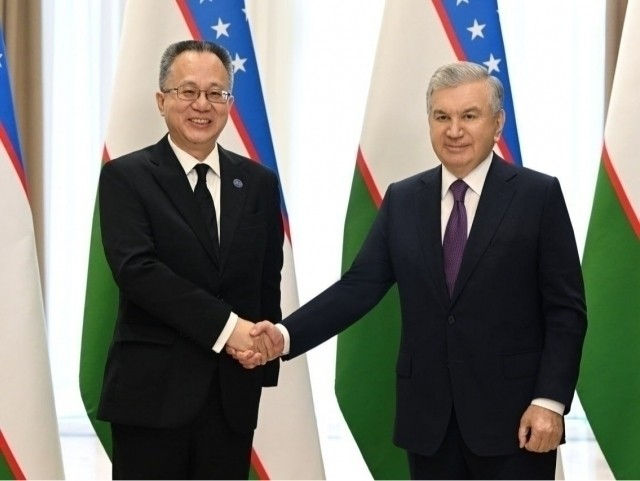
John Lee’s delegation returned from Kazakhstan and Uzbekistan with a stack of memorandums and contracts totaling about one and two-thirds billion dollars, yet the haul did not match earlier, far larger projections announced by Kazakh officials. While Hong Kong recorded 96 agreements during the trip — 61 with Kazakhstan and 35 with Uzbekistan — many of the accords lack publicly available details, leaving observers to question how many are binding projects versus preliminary understandings.
From Hong Kong’s standpoint the visit was pitched as a push to boost trade and investment links across the region, but local business circles were left wanting clearer timelines and firm financing commitments. Analysts point out that governments and firms commonly sign broad cooperation papers on such missions to open doors, not to finalize turnkey infrastructure programs. And in this case, Astana earlier told reporters that discussions had included potential projects exceeding about one hundred billion dollars, a figure that did not materialize in the final accounting for contracts inked during the visit.
Several specific outcomes were disclosed by Central Asian ministries. Kazakhstan secured an arrangement to reroute an additional 2.5 million tons of Russian crude destined for China, a move projected to bring roughly a quarter-billion dollars in transit fees over the next decade. Transport cooperation advanced too: officials agreed to drop quantitative limits on long-haul trucking permits between the two countries, pilots are underway for toll payments via WeChat Pay, and a TIR Green Corridor at the Alashankou crossing aims to shorten border hold-ups. Astana also launched a pilot online grain marketplace built on a Chinese trading platform, opened direct Air Astana service to Guangzhou with summer capacity set to peak at 51 weekly flights, and welcomed a Chinese-run assembly line for agricultural drones in the Turkestan region.
In the smaller economies, bilateral initiatives were more modest but notable. Kyrgyzstan formalized sister-city relations between Bishkek and Zhengzhou and brought modernized operations online at the Torugart-1 coal site in the Naryn region, a joint venture between local miners and a Chinese energy firm. Municipal leaders in Naryn are also considering a surveillance project with a Chinese technology provider that would include facial-recognition capabilities to monitor public spaces. Tajik officials, meanwhile, agreed to broaden technical training and agricultural education links with several Chinese cities.
Uzbekistan’s participation produced preliminary investment pledges reported at approximately $3.5 billion, largely aimed at urban upgrades in Tashkent — from rapid transit to housing and drainage. The forum in Xi’an also yielded a trio of trade contracts: one for precious-metal jewelry shipments estimated at $150 million, another for cotton yarn near $5 million and a smaller deal for silver concentrate around $1 million. Official statements from Tashkent, however, sent mixed messages about financing: one release described the deals as turnkey arrangements to be delivered by Chinese contractors without using Uzbekistan’s central budget or state guarantees, yet the same text also referred to staged payments to be covered over time by newly generated city revenues. That kind of financing ambiguity could complicate project delivery, experts say.
Taken together, the outcomes of the trip suggest tangible progress on logistical and commercial fronts, but fall short of the marquee infrastructure breakthroughs some officials had implied were possible. Observers note the visit’s value as a signal of sustained attention from Hong Kong and mainland-linked investors, yet they warn that converting memorandums into completed projects will require clearer contracts, transparent funding sources and follow-through by both public and private actors. For Hong Kong leaders and local firms hoping to expand into Central Asia, the next step will be turning those headline figures into concrete construction schedules and bankable project agreements.


Comments