Kazakh Citizens, Firms Now Win Nearly Three-Fifths Of Administrative Cases, Officials Say
- Andrej Botka
- Jun 11
- 2 min read

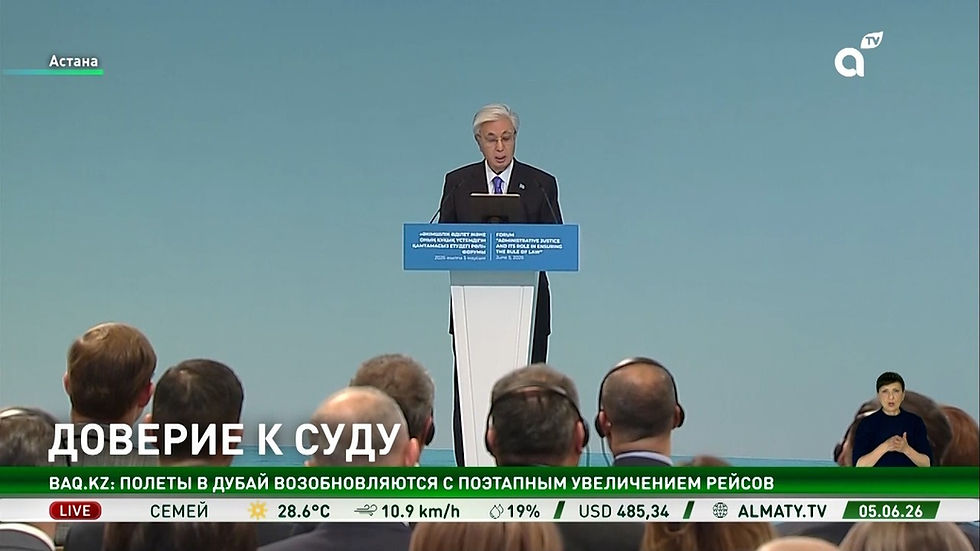
Kazakhstan’s recent legal changes have coincided with a sharp rise in successful challenges to government decisions, senior officials told an Astana forum. Judges and court administrators reported that the share of administrative disputes decided in favor of citizens and businesses climbed from roughly one in seven cases five years ago to nearly three-fifths today. President Kassym-Jomart Tokayev and Supreme Court Chairman Aslambek Mergaliyev framed the shift as evidence that new administrative courts and procedures are improving access to justice.
Mergaliyev pointed to the numerical swing as proof that many procedural obstacles have been dismantled, allowing private parties and entrepreneurs to restore rights and contest state actions more effectively. He said reforms have prompted courts to take a closer look at how agencies justify their decisions, and to demand clearer proof when government conduct is challenged.
Tokayev described a changed legal environment in which administrative bodies now must substantiate their rulings, while judges place more weight on gathering and weighing evidence. He emphasized the government’s push to prevent conflicts before they reach the bench, citing the eOtinish online portal that has processed about 16 million electronic appeals, complaints and information requests in the past five years. Officials say the next priority is reducing inconsistent administrative practices at regional and national levels so the same disputes don’t recur.
Investor-related litigation drew particular attention. Court statistics presented at the forum indicate that investors prevail in as many as four out of five disputes with state entities. The government has tied legal reform to an economic agenda it hopes will attract $62.7 billion in investment next year, including more than $25 billion from abroad, while moving the investment ombudsman’s duties to the Prosecutor General and creating a new Committee for the Protection of Investors’ Rights.
Outside observers welcomed the courtroom numbers but cautioned they only tell part of the story. A legal scholar who reviewed the data said the stronger win rate suggests better procedures, yet warned that entrenched problems — corruption, pressures on judicial independence and the handling of politically fraught cases — could blunt the reforms’ practical effect unless administrative bodies change how they operate day to day.
The broader test, analysts say, will be whether gains in courtrooms translate into steadier, more predictable administrative decision-making so disputes are avoided rather than litigated. If that happens, the country could see lasting reductions in conflict between citizens, companies and state bodies; if not, the improved statistics may remain a measure of progress rather than proof of deeper institutional change.


Comments