Kazakhstan Must Move Faster To Turn Mineral Wealth Into Local Jobs
- Andrej Botka
- May 7
- 2 min read

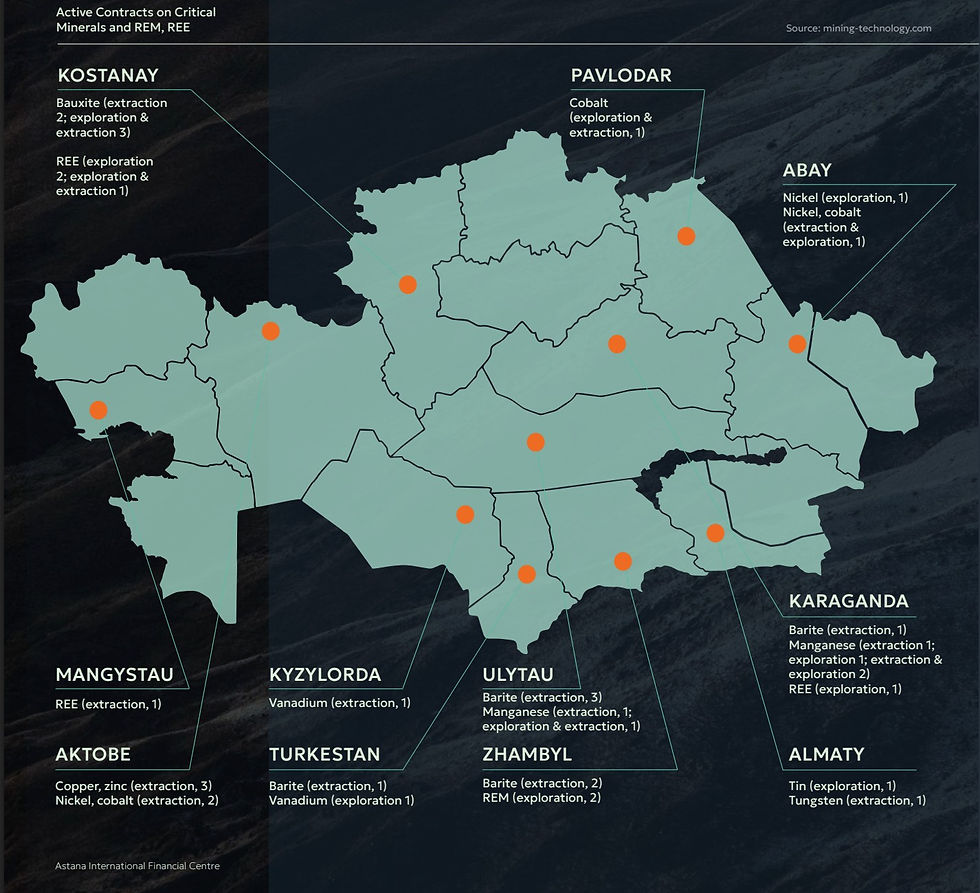
Kazakhstan risks a painful local contraction unless authorities pair new mine approvals with workforce retraining, local industry development, upgraded infrastructure and concrete transition plans for towns that depend on a single resource.
Local officials and community leaders are already warning that map updates and fresh extraction permits won't stop factory closures or wage declines once ore runs low. Mines can’t sustain regional governments or employ residents if the minerals beneath them remain unverified, unfunded or shipped out unprocessed. If action is delayed, the pressure on reserves could turn into a broader economic problem in the 2030s and 2040s.
The country still holds advantages that many states would envy: abundant mineral holdings, a position midway between European and Asian markets, and growing demand from overseas buyers. But having deposits is different from being ready to turn them into manufactured goods, taxes and stable employment. Investment in exploration slowed after the early-2000s boom, and much of the chance to build long-term upstream capacity went unrealized. That makes the current window to build processing, certification and financing much smaller than it looks.
Local economists and university leaders say the clock is running. A labor specialist at a regional technical university argues that retraining programs should begin now so miners and technicians can move into processing, maintenance and machinery fabrication. Officials also suggest targeting one-third of commodity windfalls to build smelters, transport links and vocational schools in mining districts, while encouraging small-scale manufacturers to set up nearby.
Practical steps include tying new licenses to local content and training commitments, expanding rail and power to mining towns, and creating finance instruments for exploration and value-added plants through public-private partnerships. Communities will need credible transition plans outlining timelines for diversification so towns aren’t left without jobs when a shaft closes.
If policymakers, universities and companies coordinate quickly, Kazakhstan can convert its underground assets into longer-lasting local prosperity. If they don't, many single-industry settlements will confront a slow, unavoidable decline within a generation.


Comments