Kazakhstan Positions Itself As A Technical Partner For Any IAEA-Iran Arrangement
- Andrej Botka
- Jun 4
- 3 min read

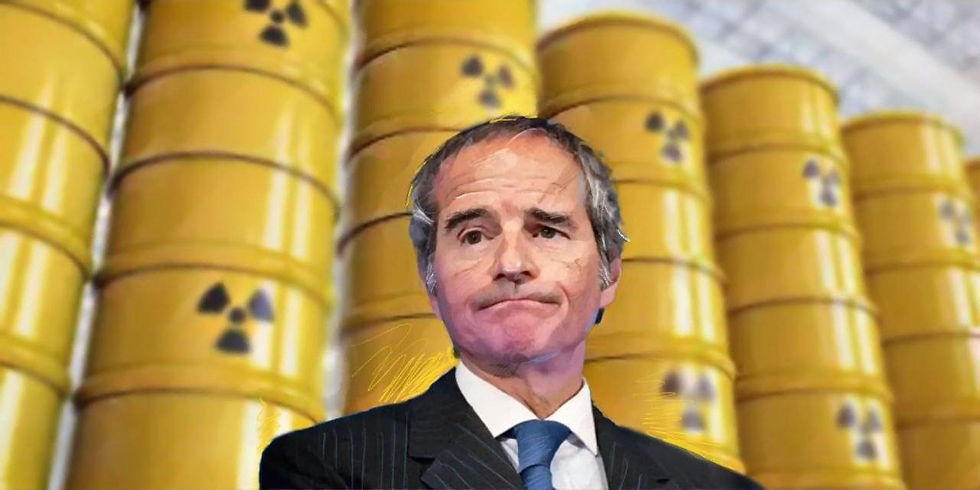
Kazakhstan’s president met the International Atomic Energy Agency chief in Astana on May 26 and raised the prospect of his country serving as a technical partner should an IAEA-led solution to Iran’s nuclear dispute be agreed politically. President Kassym-Jomart Tokayev and Director General Rafael Grossi signed a roadmap to guide agency cooperation through 2036 and added pacts on nuclear medicine and scientific research. Officials emphasized that any Kazakh role would follow — not precede — a political deal: the government framed its offer as a confidence-building contribution that would apply only if the international parties and the IAEA set out the legal and operational terms.
The suggestion carries practical weight because Kazakhstan already hosts a major IAEA-backed fuel reserve and has a long record of working with the agency. The so-called low-enriched uranium bank at the Ulba Metallurgical Plant in Oskemen, managed by the IAEA, holds about ninety tonnes of low-enriched uranium hexafluoride as an emergency supply for eligible states. Ulba shows that Kazakhstan can house sensitive nuclear material under strict safeguards and bespoke legal arrangements — but it also illustrates limits. The Ulba facility was designed for reactor fuel and cannot, under existing rules, accept or handle Iran’s highly enriched material or undertake activities such as downblending without new agreements and likely new infrastructure.
Kazakhstan’s nuclear policies are shaped by its history. The nation still carries the legacy of the Semipalatinsk test site, where decades of Soviet weapons testing left enduring public health and social memories. That history helped drive a domestic anti-testing movement in the late 1980s and informed the decision by Kazakhstan’s leaders, after Soviet collapse, to relinquish the strategic warheads located on their soil. The country transferred inherited weapons to Russia and joined the Nonproliferation Treaty as a non-nuclear-weapon state, turning disarmament into a central element of its diplomatic identity. Those choices opened doors: in 2013 Kazakhstan hosted international talks with Iran and, under the 2015 nuclear agreement’s implementation phase, Kazatomprom provided 60 tonnes of natural uranium to Tehran as part of an internationally coordinated arrangement.
Still, the technical capacity to support an Iran-related mechanism is not the same as political authorization to do so. Any move to place Iranian material abroad, to dilute it, or to put it under third-party custody would require a new legal framework, financing commitments, custody and verification procedures, and possibly dedicated facilities beyond Ulba’s mandate. Tehran has not agreed to export its most sensitive stockpiles, and recent IAEA reports indicate outstanding verification challenges. Until capitals — Tehran, Washington, regional actors and Israel among them — and the agency agree on a rules-based package, Kazakhstan remains a potential host, not an active participant in a transfer or processing operation.
Experts say that while the step from potential to operational is narrow in technical terms, it is wide politically. “If a political compact is struck, a country with Kazakhstan’s track record could speed up implementation,” said Dr. Lina Novak, a nonproliferation specialist who has advised international agencies. “But the reverse is true: without clear international legal instruments and buy-in from all stakeholders, even the best-equipped site can’t be used.” Kazakh officials have stressed that their offer is conditional and intended to strengthen verification and risk reduction, not to become an instrument of coercion or a bargaining chip between rivals.
What Kazakhstan can realistically supply is the institutional scaffolding for verification and the practical know-how to put safeguards into operation. That would be useful in a post-agreement phase: it could make any verified reductions or custodial arrangements functionable and give the IAEA a tested partner for long-term oversight. But such a contribution would not replace the need for a political settlement of the wider dispute. In short, Astana can make a limited technical solution work if one is negotiated, yet it cannot negotiate that solution on behalf of the parties.


Comments