Kazakhstan Pushes Rapid Digital Shift, Betting on AI to Drive New Growth
- Andrej Botka
- May 7
- 2 min read

Kazakh leaders say the country must hasten its move to a data-driven economy and widen use of machine learning tools to avoid slowing growth and to attract outside capital.
President Kassym-Jomart Tokayev told members of the AI Development Council on May 4 that the nation’s old engines — commodity exports and inexpensive labor — are losing their edge, and that without new digital platforms growth could stall. He warned Kazakhstan faces a middle-income squeeze and called for a comprehensive government data architecture so automated systems can work effectively across ministries.
Officials are already piloting that vision in areas that touch businesses and households. Customs clearance has been sped up by a new electronic platform that now handles declarations in less than a minute; a single-window logistics portal is under construction; and tax processing that once took roughly an hour now completes within about sixty seconds. A finance-data hub pulls together information from nearly eight dozen sources, helping officials monitor the budget in near real time and flag risky disbursements worth a few hundred billion tenge. Authorities are also building a procurement forecasting tool tied to a national product catalog containing more than 23 million items to cut wasteful spending.
Tokayev highlighted that the digital portion of the global economy already represents over one-seventh of world output, and he urged development of new financial instruments such as digital currencies and tokenized assets to make Kazakhstan more appealing to international investors. He has ordered the government and the central bank to coordinate a strategy for the emerging crypto market and said a regulatory framework for digital assets is in place.
The president also stressed that measuring progress matters: policymakers need clearer methods to separate gains coming from traditional industries from those derived from innovation, otherwise headline GDP growth can mask deeper problems. Analysts say that without sharper metrics, reforms may look more successful than they actually are.
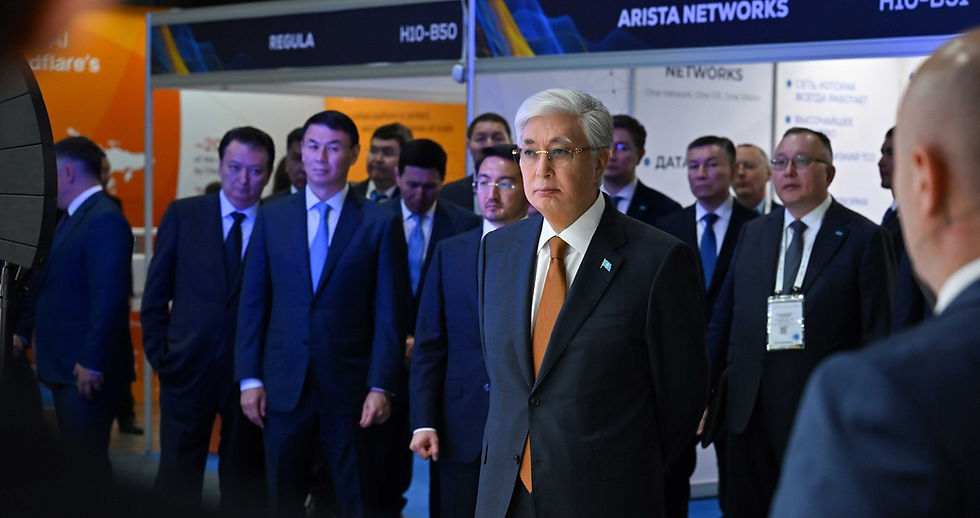
At the GITEX regional show Tokayev reviewed projects in artificial intelligence, logistics and financial technology, including a virtual assistant used in a major telecoms contact center to speed customer service and spot fraud. Experts such as Rustem Mustafin, who heads a digital social sciences center, point to strengths that could help Kazakhstan compete: abundant energy and room to build data centers, including a planned Ekibastuz cluster that proponents say could reach about 1 gigawatt and draw billions in investment. He cautioned, though, that countries that fail to retain control over their data and models risk ceding important decisions to external systems. Kazakhstan has already passed AI and digital laws, hosts two systems ranked among the world’s top supercomputers, and is positioning itself as a regional hub for computing and technology cooperation.


Comments