Kazakhstan Tightens Grip On Its Mines, Seeking Larger Share As Global Demand Grows
- Andrej Botka
- Apr 23
- 3 min read

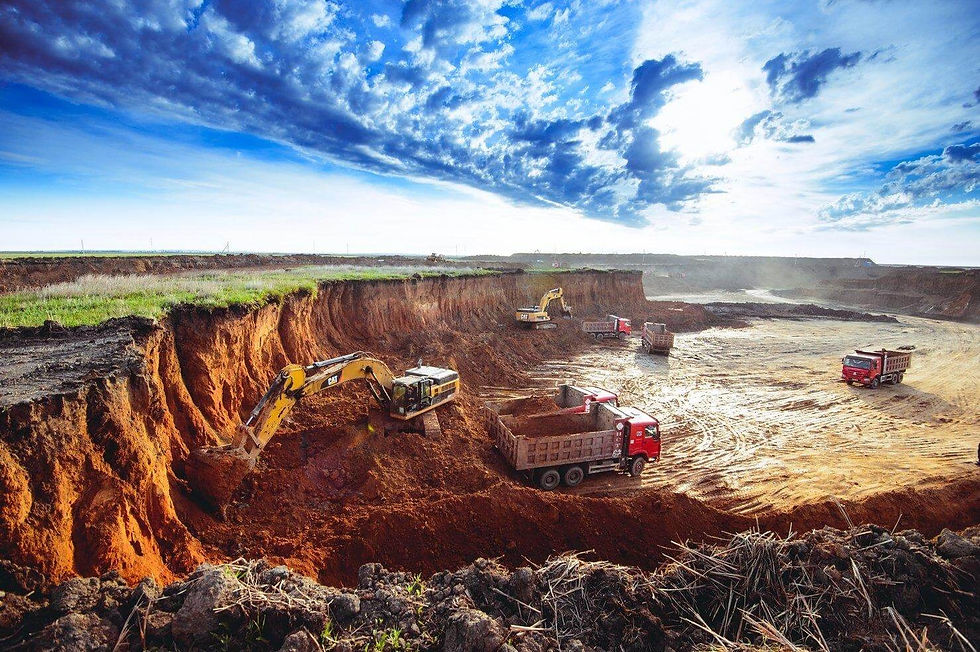
Kazakh officials have quietly stepped up their oversight of the country's mineral sector, moving to secure a bigger portion of revenues as international demand for battery and critical metals climbs. Foreign companies and financiers remain eager to invest in Kazakhstan's rich deposits, but recent revisions to tax and sub-soil rules have raised fresh questions about how predictable the business climate will be for outside investors and for local communities counting on jobs and public services.
In the past few months, lawmakers and regulators have enacted a new royalty regime to replace the Soviet-era mineral extraction charge and hiked levies on uranium, gold and silver. The royalty rules apply only to projects that win permits beginning in 2027, and officials say the rates are intended to capture more value for the state. Industry representatives note the new charges are roughly two times higher than some peers elsewhere, a shift that will alter project economics even as the government argues the money will fund development. The administration also effectively consolidated control over uranium by assigning the sector's development to the state producer, Kazatomprom — a move that comes as nuclear fuel draws renewed international interest.
Changes to the sub-soil use framework have triggered the greatest unease. Amendments restored a licensing advantage for companies that commit to build processing plants, rather than exporting raw ore, and there are active proposals to give the state mining firm, Tau-Ken Samruk, first refusal on lucrative permits. Astana has also announced it will bankroll exploration directly, allocating about $500 million to study roughly 20 sites nationwide, a program that will put the state in the field alongside private explorers. "It's reasonable for the state to demand benefits from its resources, but when the ground rules shift frequently, investors start to rethink risk," said a Canadian exploration executive at the Minex Kazakhstan conference, speaking on condition of anonymity.
The industry reaction at Minex Kazakhstan '26 was mixed: booths and displays showcased ambitious survey work and processing plans, yet discussions offstage concentrated on legal uncertainty. Government officials framed the steps as finishing touches on a reform package first rolled out in 2018 — reforms that many credit with opening the country to the latest wave of western capital. "We are trying to refine the regime so it yields more for the public without closing the door to foreign partners," a Kazakh vice minister told attendees, emphasizing ministerial sign-offs on certain license awards as a new safeguard. Critics of the changes, including lawyers who helped draft earlier reforms, say the aggregate effect since 2023 has been to move away from the transparent, first-come-first-served approach that attracted major investment, replacing it with discretionary elements they warn could invite disputes.
Diplomats and trade groups echoed these concerns. Foreign envoys praised Kazakhstan's resource potential but urged that any future alterations be discussed with industry to avoid setbacks. A Western ambassador told a panel that while the country is a regional leader in mineral potential, the mismatch between public expectations and investor certainty is a delicate problem. Inside Kazakhstan, business associations argue the state must both secure revenue and preserve investor incentives; they welcome some measures, like new royalty clarity, while criticizing others, such as preference rules that could favor state-owned companies over private bidders.
For ordinary Kazakhs, the stakes are concrete. Higher royalties and a larger state role could generate funds for infrastructure, healthcare and local development in mining regions. But they could also slow the pace of new foreign project starts or push some companies to delay investment decisions, which would reduce short-term employment prospects and tax inflows. The government's moves come amid a global scramble for critical inputs—driven by technologies from electric vehicles to renewable energy—and Astana appears intent on positioning itself as a stronger negotiating partner in that contest. Still, past legal disputes in the energy sector, including arbitration wins by the state against international oil consortia that led some companies to pause projects, loom large in investor calculations.
For now, mining houses continue to scout opportunities in Kazakhstan, but they are watching parliamentary debates closely. If policymakers keep pushing for a heavier budget share and more state involvement, some investors may demand bigger guarantees or simply shift attention elsewhere. Officials, meanwhile, face a political calculation: how to extract more income from the nation's deposits without undermining the market competition that has historically led to the most significant discoveries and the quickest development.


Comments