Kyrgyz Start-up Pushes For Homegrown AI, Rolls Out Voice Tools With Parliament Tie-Up
- Andrej Botka
- Jun 18
- 2 min read

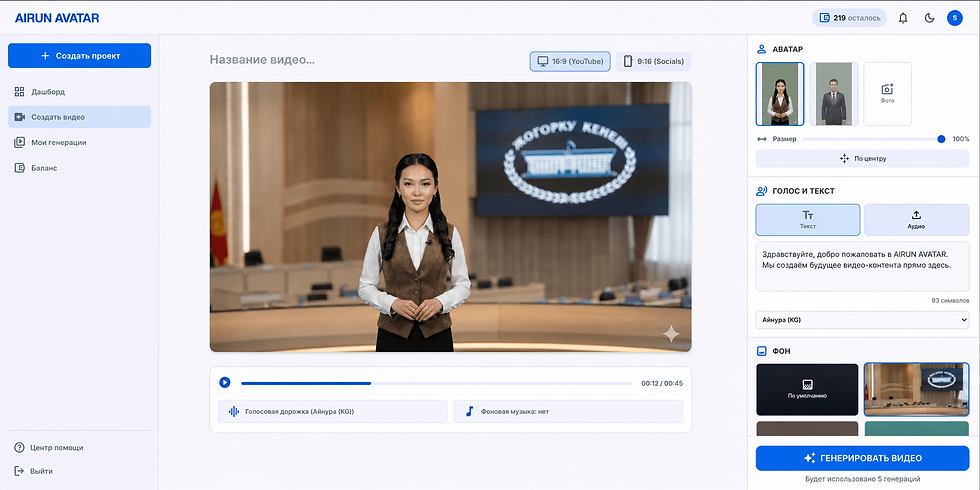
AIRUN, a Bishkek-based technology firm, says it has developed what it regards as the country's largest collection of Kyrgyz-language material and is now deploying that work in government services and private-sector systems. The company’s chief executive described to TimesCA how the platform converts spoken Kyrgyz into formal documents for public institutions, runs Kyrgyz-language chat and voice assistants for banks and media, and is preparing to install similar services at the mayor’s office in the capital. Officials and customers are already using the system in the national legislature, the company added.
The initiative began as a concentrated effort to gather publicly accessible Kyrgyz texts and audio and prepare them for machine learning. Building the data library demanded a dedicated staff and a lot of trial and error. The team found model training unpredictable at first; engineers compared outcomes to a kind of gamble, he said, and the firm adapted by fostering a nonjudgmental, collaborative problem-solving approach. Over time, AIRUN transitioned from an idea into an operating business with live projects and paying clients in both government and commerce.
The firm has grown on its own receipts so far and is open to outside capital, arguing that demonstrations of real-world use reduce investor uncertainty. AIRUN credits early cooperation from the Jogorku Kenesh, the Kyrgyz parliament, and support from the Kyrgyz State Medical Academy. The company’s view is that the strongest boost for domestic developers comes when public institutions and universities adopt local technology — that usage drives product improvement and builds local know-how. A local academic who studies technology policy noted that hands-on deployment often matters more than grants or tax breaks when trying to retain and grow scarce technical talent.
AIRUN describes its platform as a foundational language technology stack rather than a single application. It includes a Kyrgyz text-generation engine, a conversational AI for everyday queries, speech-to-text, voice synthesis, machine translation, and virtual presenters. Those elements have been integrated into customer-service bots and automated phone agents for financial institutions, an automated subtitle and translation tool for a streaming partner, and the parliamentary digital reception system that lets citizens report problems in Kyrgyz by voice, producing a ready-to-send appeal. The company also intends to introduce learning tools that teach coding in the Kyrgyz language to bring more young people into IT careers.
From the outset, the developers say they built a repeatable approach — a step-by-step method for collecting a language corpus, training models, and operating services — so that other countries facing similar language-preservation and sovereignty concerns could follow the pattern. AIRUN reports it is in talks with several foreign partners who want to explore locally controlled AI. Security specialists consulted for this story emphasized the value of keeping sensitive public-sector data within national borders and argued that local control can reduce reliance on outside platforms.
Looking ahead, the company plans to open an applied AI lab within a five-year window to train researchers and engineers and to expand the domestic talent pipeline. Its leaders say success would not only sustain the business but also help create more attractive jobs at home, keeping Kyrgyz specialists connected to global markets while working on locally relevant challenges. If adoption spreads across schools, cities and ministries, they say, the result could be a noticeably deeper domestic capability in language-aware technologies.


Comments