Mines Expand As Water Supplies Shrink, Leaving Kazakh Communities on Edge
- Andrej Botka
- May 21
- 2 min read

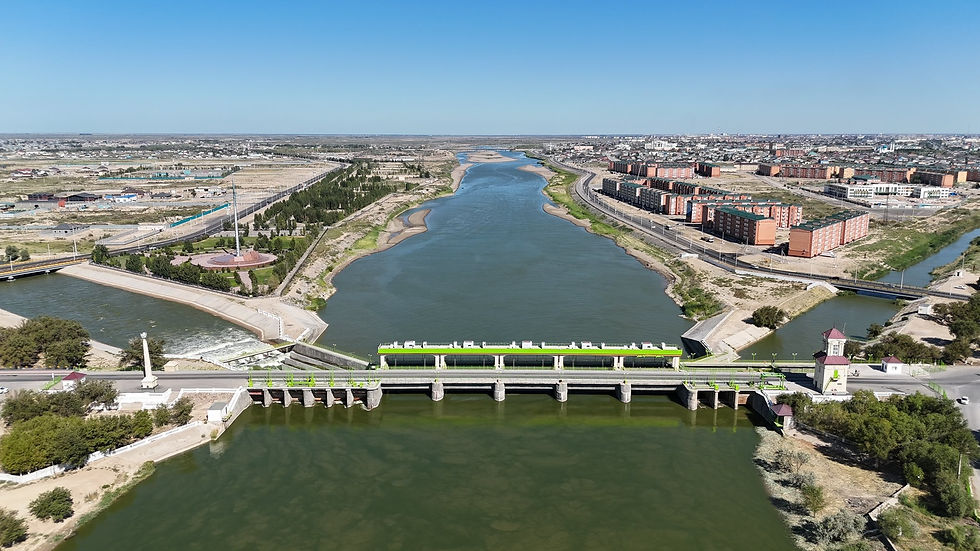
Kazakhstan’s booming mineral sector is colliding with a shrinking water supply, putting towns, farms and factory users in an uneasy bind even as the government revises its rules to rein in consumption. New legislation passed last year tightens requirements for industrial users and raises penalties, but local officials and industry watchers say the law’s impact will depend on whether regulators move from paper to practice.
The industry’s recent gains are clear: ore and metal output rose notably last year — about one in 13 more ore and roughly one in 14 more metal compared with the previous year — as foreign buyers and governments pressed to diversify sources of critical raw materials. Yet the region faces mounting hydrological pressure. Scientists warn that by 2040 mountain ice could drop by about one-third, and a U.N. analysis projects the country could face a shortfall equal to one-half of its business and household needs within the same span unless consumption patterns change.
Water is fundamental to extraction and processing. During early ore treatment, large volumes are used to separate valuable minerals from waste; in places with tight supplies, water can account for between one-tenth and one-fifth of a mine’s operating budget. And because municipal and industrial rates in Kazakhstan remain low — roughly $0.04 to $0.10 per cubic meter in 2023, compared with about $2.75 in many parts of the world — companies have little market incentive to economize. That pricing, experts say, traces back to older governance models that treated natural resources as abundant and effectively cost-free.
Academic research offers a mixed picture. A study by local researchers using data from a recent copper operation found the site recycled about five-sixths of the water it consumed and kept contamination largely in check. Still, that single operation accounted for roughly three out of every 200 industrial withdrawals and its water draw grew by about one in ten year over year. “There are clear gains when firms modernize, but growth can quickly undo those improvements,” a Nazarbayev University researcher said in an interview, noting community water users often feel the squeeze first.
Technical fixes exist, but they’re pricey. Hydrologists and consultants point to slimmer tailings slurries, drier tailings storage and expanded on-site recycling as ways to cut withdrawals and evaporation losses. Yet many long-running mines operate with legacy systems and limited appetite for capital overhaul. The updated water code, which will be phased in over five years starting next year, mandates water-saving technology for industrial users and raises fines for breaches. Observers who have worked in the field for years say some new projects are adopting better systems, but enforcement at existing sites remains spotty, and local residents worry authorities won’t act swiftly during shortages.
For regional planners and company leaders, the calculation is stark: the main threat is not rising costs but interrupted supply. Firms can find alternatives when energy prices spike, but water shortages halt operations and strain communities. Officials, miners and townspeople will need to coordinate on rationing, investment and monitoring if Kazakhstan’s mining surge is to continue without draining rivers, aquifers and the livelihoods that depend on them.


Comments