New Transit Permit Agreed in Astana Aims To Speed Middle Corridor Traffic
- Andrej Botka
- May 28
- 3 min read

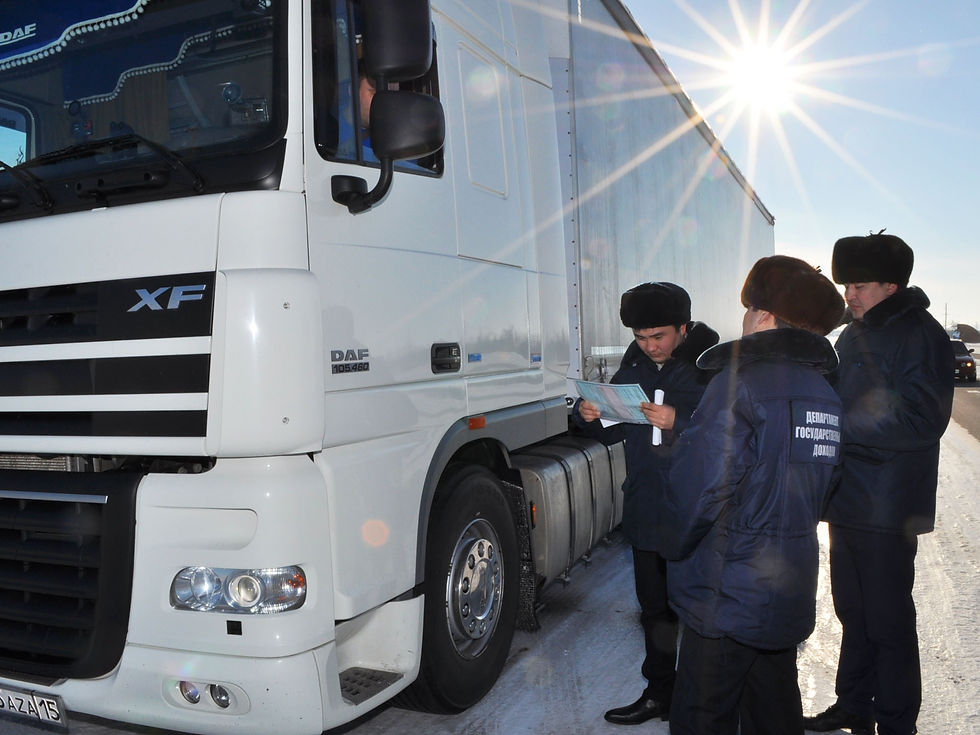
An accord signed in Astana on May 15 could shorten waits and streamline paperwork for freight moving along the so‑called Middle Corridor, officials and regional sources say. Under the pact, drivers operating between Kazakhstan, Kyrgyzstan, Uzbekistan, Azerbaijan and Ukraine will be able to secure a single transit authorization that participating customs agencies will accept, cutting duplicate inspections at border crossings and trimming overall transit times. Trade experts predict the move may lower transport expenses and make the route more competitive for cargo traveling between China and European markets, though implementation hurdles remain.
Kazakhstan, which hosted the meeting where the document was finalized, is deepening practical ties with China across several fronts even as some official sessions remain tight‑lipped. Astana’s customs simplification comes alongside a string of bilateral projects: a new light‑rail line built with Chinese technology opened this spring, and a state energy company secured loans from a Chinese banking syndicate to underwrite roughly 70% of a 1.5 billion yuan, 160‑megawatt power station near Aktau. Kazakh trade data show about $7.8 billion in commerce with China in the first quarter of 2026 — roughly three‑fifths of the figure Beijing reports — a divergence analysts say highlights persistent data gaps and possible re‑exports. Agricultural shipments to China have shifted markedly: sunflower meal exports are now nearly four times what they were a year earlier, vegetable oils and related meals have climbed by about three‑fifths, rapeseed oil rose by roughly one‑tenth, while flour shipments to China fell by close to three‑fifths. Authorities are also planning a major upgrade at the Khorgos border zone, including four temporary storage hubs and a move toward round‑the‑clock operations; Air Astana is expanding its China schedule from 23 to 50 weekly flights.
Bishkek is juggling big infrastructure promises with local resistance. Beijing has offered Kyrgyzstan a $305 million loan to cover about half of the national contribution to the China‑Kyrgyzstan‑Uzbekistan railway, yet the project has provoked protests in some districts where heavy truck traffic has damaged roads. Local officials say organized blockades could be mounted unless restrictions are imposed, and prosecutors have warned that attempts to halt works could lead to criminal charges. Job creation tied to the rail line has so far been modest: roughly 2,000 Kyrgyz citizens are employed to date. Meanwhile, Chinese and Kyrgyz firms have launched a $430 million coal‑sector and logistics program, and technical cooperation on seismic‑resistant construction is expanding — signs the two governments remain committed to deeper economic links despite local friction.
Officials from Uzbekistan’s autonomous Karakalpakstan used a visit to China to firm up several commercial deals, including a $40 million arrangement on cotton cultivation and a $10 million purchase of 54 electric buses and charging infrastructure. An agreement was also reached to assemble and service Chinese farm machines in Nukus. At an international livestock expo, Uzbek and Chinese entities signed joint ventures aimed at setting up labs to develop feed supplements, veterinary medicines and vaccines, moves designed to boost domestic value added in animal husbandry and to shorten supply chains for agro‑inputs.
Turkmenistan received a diplomatic signal from Beijing: China’s president has accepted an invitation to visit Ashgabat, with dates still to be announced. The exchange comes as energy and transit cooperation remain high on both capitals’ agendas, and could presage new agreements on gas, infrastructure or logistics when the visit is scheduled.
Analysts say the new single‑permit system could make the Middle Corridor a more attractive alternative to northern routes, but caution that paperwork reform is only one piece of the puzzle. “A unified document helps, but you still need more capacity at terminals, consistent IT links between customs services and clearer financing for border upgrades,” said a regional logistics professor who asked not to be named. Observers will be watching changes in average border wait times, permit issuance totals and freight volumes to gauge whether the agreement produces measurable gains. For now, officials say the measure will be rolled out in stages and will require coordination across customs, transport and infrastructure agencies before its full benefits are felt.


Comments