Pashinyan Wins Big As Armenia Signals Shift Toward West
- Andrej Botka
- Jun 11
- 2 min read

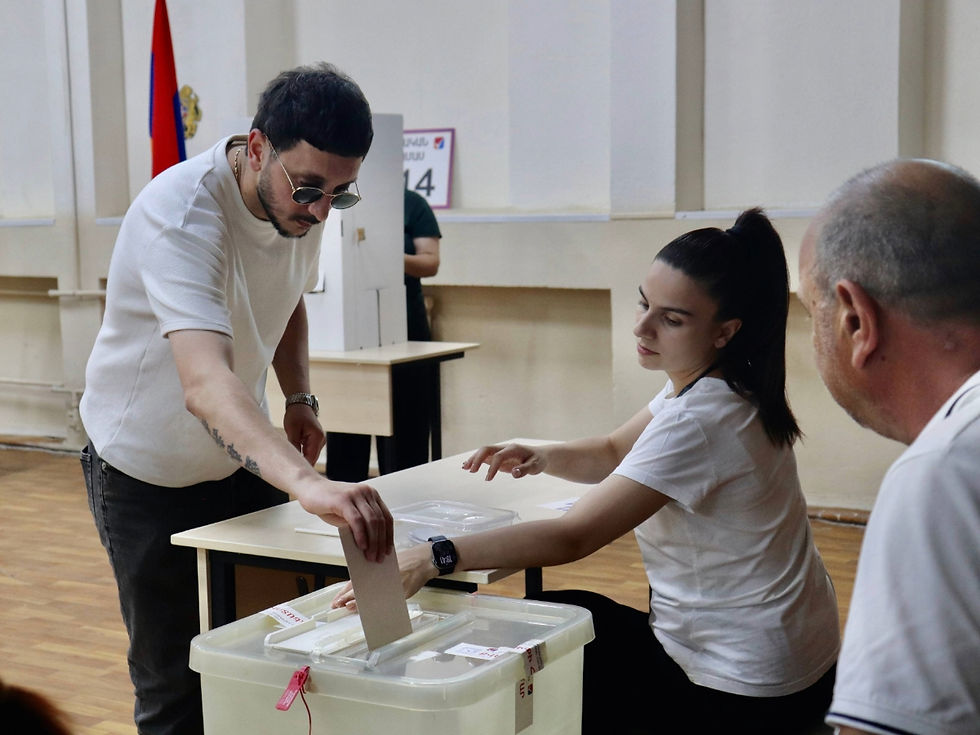
Armenians Give Incumbent A Strong Parliamentary Mandate, Raising Tensions With Moscow
Prime Minister Nikol Pashinyan’s party appears headed for a clear parliamentary majority after ballots were counted in the June 7 vote, a result that could accelerate Yerevan’s drift toward closer ties with the United States and the European Union. Preliminary tallies from the Central Election Commission show Pashinyan’s Civil Contract picked up nearly half of the ballots, far above its pre-election standing of about one in three, while roughly one in four votes went to the pro-Russian Strong Armenia party and about one in ten to the Armenia Alliance. Some 18 lists were on the ballot and turnout reached about three in five registered voters.
Pashinyan used a late-night news conference to cast the outcome as a commanding endorsement of his direction for the country, saying his administration will continue expanding cooperation with Western capitals even as it keeps Armenia’s formal membership in the Russia-centered Eurasian Economic Union. He also criticized his main rivals as figures tied to entrenched moneyed interests and suggested they represent outside agendas more than the public’s. European Commission President Ursula von der Leyen publicly congratulated the prime minister and expressed support for deeper engagement between Brussels and Yerevan.
The vote is widely viewed as a setback for Moscow. During the campaign, Russian officials and pro-Russian actors pushed a mix of diplomatic pressure and economic measures — including restrictions on several Armenian exports and a vigorous disinformation push — in what analysts say was an attempt to blunt Pashinyan’s appeal. Nevertheless, Russia remains Armenia’s top trading partner, and Kremlin interlocutors warned before the vote that closer alignment with the EU could force Yerevan to pick between Moscow’s customs bloc and deeper integration with Europe.
Samvel Karapetyan, the billionaire financier linked to Strong Armenia, accused authorities of manipulating the count and said his supporters faced harassment during the campaign; the Central Election Commission, however, concluded there were no violations that would have altered the result. Karapetyan is already under investigation in several financial-probe cases, and Armenia Alliance leader Robert Kocharyan also drew criticism from Pashinyan during his remarks.
Beyond party politics, the result has immediate policy implications. A Pashinyan-led majority should keep the proposed TRIPP trade corridor moving forward — a project that rival parties had pledged to scrap — and is likely to preserve the provisional peace framework with Azerbaijan brokered in Washington last year. But analysts warn the prime minister’s options will be limited by economic realities. “This gives him room to pursue Western partnerships, but Ankara and Moscow still matter for trade, energy and security,” said Lilit Hakobyan, a political analyst in Yerevan, noting that the government now faces the delicate task of balancing economic dependency and political reorientation.


Comments