Pashinyan Wins Parliament but Lacks Votes Needed to Rewrite Constitution, Complicating Peace Push
- Andrej Botka
- Jun 18
- 3 min read

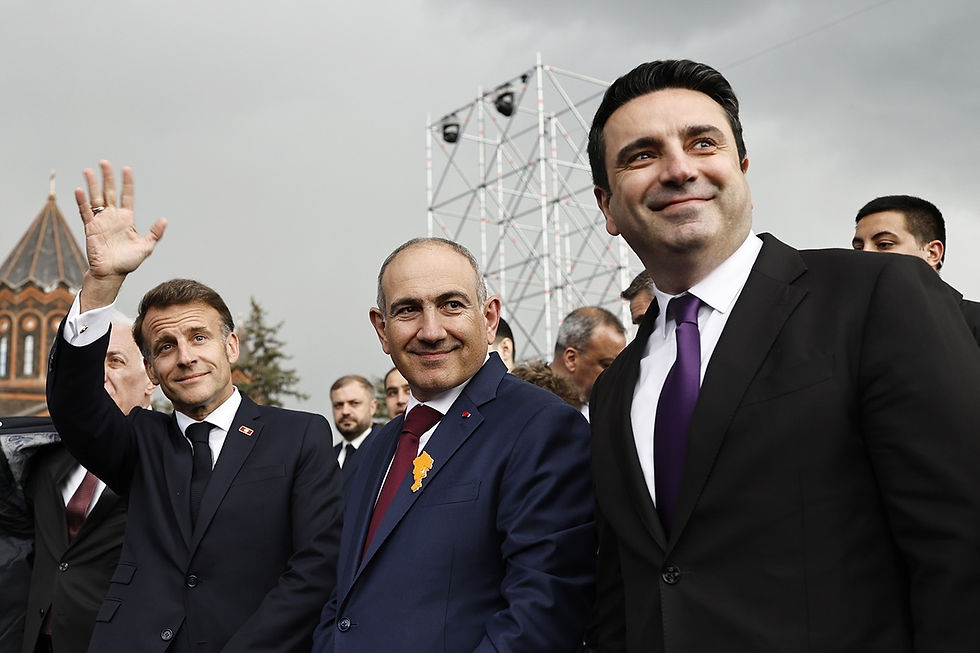
Subheadline: Victory bolsters prime minister’s westward tilt, yet falling short of a supermajority leaves a key element of a U.S.-backed peace formula stalled and raises hard questions for Moscow ties
Armenian Prime Minister Nikol Pashinyan secured a clear parliamentary victory on June 7, but his ruling party did not capture the extra seats needed to unilaterally change the constitution — a shortfall that could stall a constitution-linked peace settlement with Azerbaijan. The ballot appears to endorse Pashinyan’s effort to reduce Yerevan’s reliance on Moscow and deepen ties with the United States and the European Union, yet it also hands leverage to domestic forces that oppose his peace framework and ties with the West.
Pashinyan’s Civil Contract slate received just under one-half of the ballots and looks set to hold roughly 64 of the 105 seats in the National Assembly, down from about 71 seats after the 2021 vote when the party won slightly more than one-half of the vote. Two pro-Russian formations — one bankrolled by oligarch Samvel Karapetyan and another led by former President Robert Kocharyan — together picked up roughly 30 and about a dozen seats respectively. Because a two-thirds tally (70 seats) is required to call a binding referendum on a new constitution, Civil Contract falls short of the threshold Baku says is necessary for the previously negotiated peace package to proceed.
The constitutional dispute centers on language in Armenia’s current charter that references the country’s 1991 declaration of independence, wording that Azerbaijani President Ilham Aliyev contends amounts to a territorial claim over Nagorno-Karabakh. Azerbaijan reclaimed the enclave in 2023 after decades of conflict that began when the region had autonomous status inside the Soviet Union and escalated into full-scale fighting in the 1990s. Pashinyan has publicly backed holding a referendum to adopt a revised constitution, and government officials say drafting work continued after the vote, though no text has been released. Many voters who supported him are uneasy about removing the constitutional reference, seeing it as surrendering a historical claim rather than a legal technicality. “I voted for his push for peace, but rewriting our basic law to please Baku feels like giving up something we should protect,” said a 69-year-old Yerevan resident who voted in the city’s southwest.
International reaction split along familiar lines. European capitals and Washington quickly offered congratulations and urged continued engagement, while the Kremlin was cautious: President Vladimir Putin had not extended official greetings as of this week. A London-based regional analyst noted that Pashinyan’s mandate gives him room to press a Western-oriented agenda but argued that lacking the supermajority forces him to pursue peace through incremental measures rather than a single constitutional act. “He now has to thread a needle — deepen external partnerships while finding domestic accommodations that make a final deal politically sustainable,” said an analyst at Chatham House who follows the South Caucasus.
The campaign exposed deep domestic fault lines and raised questions about democratic practice. Opponents ran a largely negative message, including a pro-Russian rally that used manipulated imagery to stoke fear and suspicion. Samvel Karapetyan campaigned under restrictions from house arrest on accusations tied to last year’s church unrest and later faced money-laundering allegations; another prominent oligarch, Gagik Tsarukyan, was hit with tax fraud charges days after the vote. Authorities also announced cases against activists accused of vote buying. At the same time, many ordinary voters voiced mixed feelings: they back Pashinyan’s policy direction but object to his harsh rhetoric toward rivals. “I want stability and stronger ties to Europe, but the shouting and personal attacks aren’t right,” said a small business owner in central Yerevan.
With a constitutional referendum uncertain, officials and diplomats are likely to pivot toward smaller, confidence-building measures to keep the Washington-initialed peace talks alive: border delimitation work, transport and energy links, and phased legal clarifications that don’t rely on a single sweeping amendment. That path gives external actors, especially the United States, a more active role over the coming months, analysts say. Whatever route officials choose, one thing is clear: the vote consolidated Pashinyan’s position but left Armenia politically polarized and the most difficult choices — constitutional change and final status arrangements tied to Nagorno-Karabakh — unresolved.


Comments