Pentagon Packet Adds CIA Account of 1973 Green Lights Over Kazakhstan Test Range
- Andrej Botka
- May 28
- 3 min read

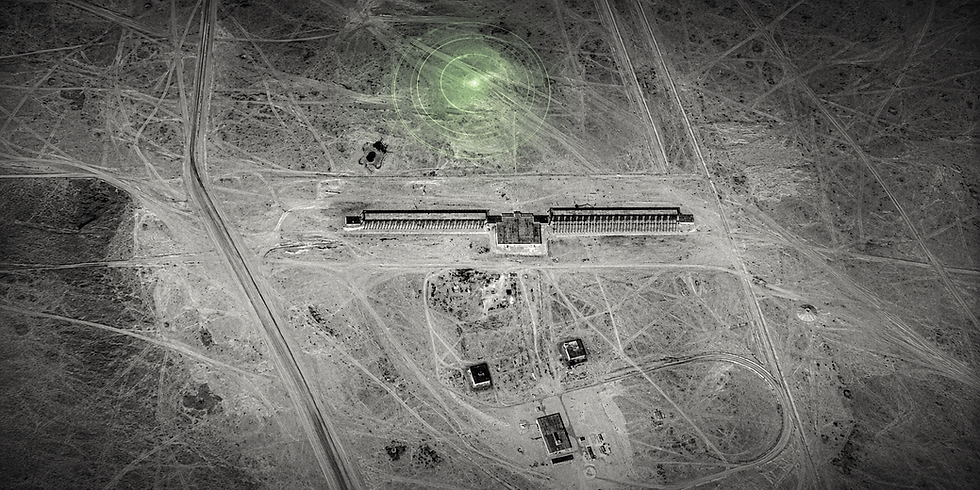
The Defense Department on May 22 published a second set of formerly classified records on unidentified aerial events that includes a CIA intelligence note about an episode at the Soviet-era Sary Shagan missile test site in what is now Kazakhstan. The new tranche, posted through the Presidential Unsealing and Reporting System for UAP Encounters, follows an earlier May release that contained a 1994 State Department cable about an airline crew sighting in the region. The CIA file centers on a late-summer 1973 observation of an unusual green luminous object above Site 7 at Sary Shagan, and it couples that account with material focused on weapons systems and range layout.
According to the agency summary, a person who identified as a former Soviet insider reported stepping outside during a televised sports broadcast and seeing a bright green, circular light to the west. The witness judged its angle across the sky but could not measure height. Within roughly a dozen seconds the disk reportedly expanded and developed multiple concentric green rings; the item made no audible noise and vanished within minutes. The document offers little on the observer’s exact role at the complex, though the detail about individual sites and installations suggests direct knowledge.
The CIA originally let out a heavily redacted version of the memo in 1978; a less-redacted copy surfaced in response to a 2019 mandatory declassification appeal by John Greenewald of The Black Vault. Much of the newly available page space remains devoted to technical descriptions of Soviet missile hardware — references to the SA-2 surface-to-air system and to a system identified in agency notes as the ABM-1 Galosh appear alongside logistical sketches — and to unconfirmed chatter that laser-related experiments and large antenna arrays may have been under way somewhere on the range.
Sary Shagan, located near Lake Balkhash and set up in the mid-1950s for anti-ballistic-missile work, is often cited as the site of the first operational interception of a ballistic warhead in 1961. The sprawling complex later came under divided control, with Kazakhstan exercising sovereignty over parts of the territory while Russia has continued to lease segments for its programs. The combination of live-fire testing, high-energy research and classified projects has long made the area a magnet for both official scrutiny and speculation.
The CIA file sits in a larger pattern of Soviet-era anomalous reports. The Petrozavodsk incidents of 1977 — when witnesses across northwest Russia and neighboring countries described luminous, expanding objects that cast rays toward the ground — prompted Soviet scientific and defense institutions to launch formal study programs in the late 1970s. Those initiatives, run by the Academy of Sciences and by the Defense Ministry, collected field accounts and tried to sort satellite re-entries, atmospheric optics and instrumentation faults from other explanations. Some investigators linked the 1977 wave to the early-morning launch of Kosmos 955, though later work suggested the picture was more complicated.
Another dossier, circulated in translation as “Thread Three,” contains an account from northern Kazakhstan in 1979 in which a youth group allegedly encountered humanoid figures near a camp mound; that story, traced to contemporaneous letters and local press, has not been corroborated in state archives. Scholars and archive specialists caution that Cold War-era intelligence packets frequently blend first-person observation, rumor and secondary reporting. “Files like this tell us as much about how events were heard and recorded as they do about what actually happened,” said Dr. Aidos Beketov, a Kazakhstan-based researcher who studies Soviet testing sites, noting that future releases may shed more light on provenance and technical context. For now, the newly posted documents renew questions about what was seen, who recorded it, and why such reports persisted in parallel with missile and space activity.


Comments