Plan Aims To Route Gulf Oil Through Syria, Turkey To Cut European Reliance
- Andrej Botka
- Jun 18
- 2 min read

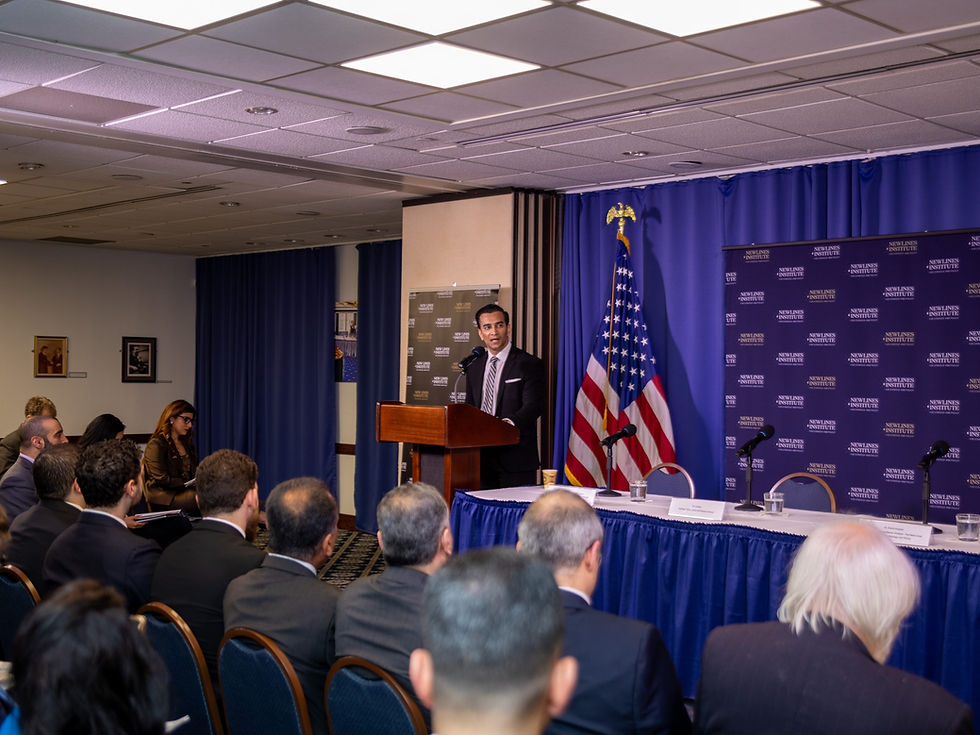
A Washington think tank has proposed a sweeping program to redirect fossil-fuel shipments out of the Persian Gulf overland through Iraq, Jordan, Syria and Turkey, sending crude and gas to Mediterranean and European markets rather than through the Strait of Hormuz. The New Lines Institute’s “Four Seas” blueprint envisions a consortium to raise as much as $10 billion to build conduits capable of moving about 4 million barrels of oil per day and roughly 50 billion cubic meters of gas a year, with Syria positioned to collect several billion dollars annually in transit and production income.
Organizers say the plan would knit Gulf export capacity to existing and planned export networks in the Black and Caspian basins, creating new overland options that could lessen Europe’s dependence on Russian and Iranian supplies while channeling Gulf capital into projects aligned with Western firms. The proposed route would run westward across Iraq and Jordan before reaching ports and processing points in Syria and Turkey, offering an alternate corridor for tankers and terminals on the Mediterranean.
The idea borrows structural inspiration from a European initiative that began a decade ago, in which a group of EU countries pursued tighter links in energy, transport and digital links. Backers argue that a similar framework in the eastern Mediterranean could accelerate projects that private investors alone are unwilling to underwrite because of political risk, by pooling public and private finance and setting common standards for construction and operation.
A policy document released with the proposal frames the initiative as an opportunity that could emerge if Syria moves toward stability and reengagement with outside partners. The paper lists multiple objectives: strengthening supply diversity for European buyers, creating commercial openings for U.S. and allied firms in regional infrastructure, and providing a steady revenue stream to support reconstruction in Syria. But it also acknowledges the enterprise would require intensive diplomacy to secure transit agreements and investor guarantees.
Speakers at the Washington unveiling described the concept as feasible in principle, while warning of complex barriers. Robert F. Cekuta, a retired U.S. diplomat, told attendees that alternative export lines are needed but stressed the difficulty of converting political will into contracts and construction. “Reintegrating Syria requires more than an idea,” he said. “You have to get companies, governments and financiers around the table and tackle details on security, ownership and sanctions.”
Analysts point to the most obvious obstacles: ongoing instability inside Syria, the patchwork of sanctions and counter-sanctions affecting several governments and firms, and the prospect of pushback from actors that benefit from the status quo. Even if financing is secured, the project would likely be executed in stages and could take years to produce meaningful flows, leaving its ultimate impact on European gas and oil markets uncertain.


Comments