Putin’s Visit Leaves Big Question Mark Over Who Will Pay For Kazakhstan’s First Nuclear Plant
- Andrej Botka
- Jun 4
- 2 min read

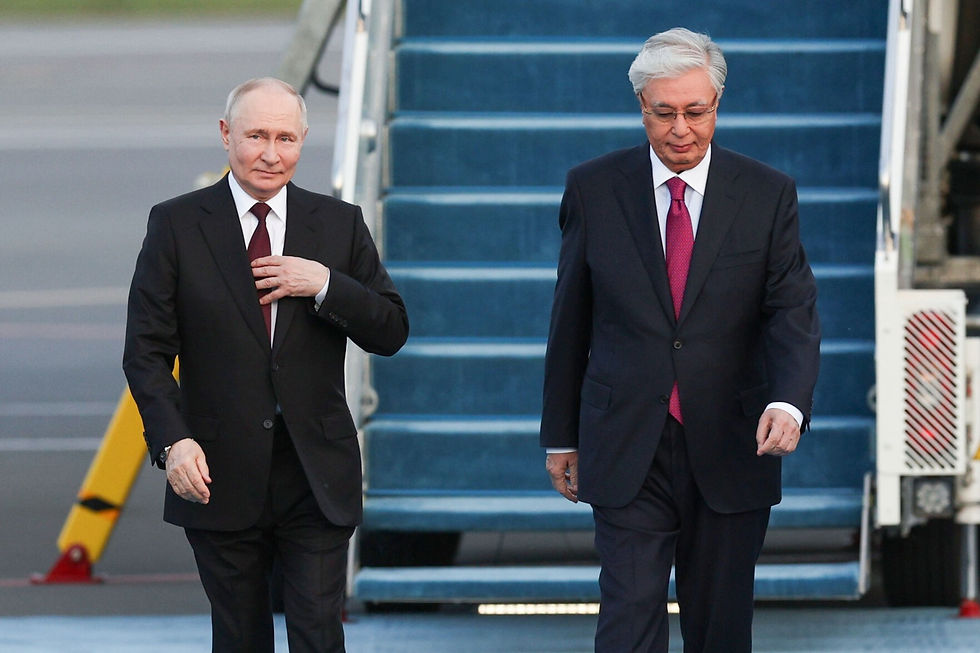
Kazakh officials and the Kremlin signed a framework deal on May 28 for a reactor on Lake Balkhash, but the credit lines that would finance construction remain unspecified.
Russian and Kazakh leaders formally agreed on the “basic principles” for cooperation on Kazakhstan’s planned inaugural nuclear generating station during President Vladimir Putin’s state visit, yet the central issue — who will fund the project — was left unresolved. Astana announced last year that Russia’s state nuclear firm, Rosatom, would build the facility on the lake’s shore, and Russian officials have since said the price tag for the project and related infrastructure is roughly sixteen and a half billion dollars. Still, the visit produced no concrete accounting of the loans, guarantees or repayment terms that would underwrite the work.
Officials have said Moscow will provide credit to cover a large portion of the bill, but exact proportions are missing from public documents. Rosatom’s leadership was reported as saying Russian lending would shoulder most of the investment but not the entirety; earlier, unverifiable estimates suggested Moscow might cover about four-fifths to five-sixths of the cost. Those imprecise figures do little to calm doubts about who ultimately absorbs cost overruns or long-term liabilities.
The uncertainty comes as Russia’s fiscal position has weakened. The Kremlin recently lowered its 2026 growth outlook from about thirteen thousandths to roughly four thousandths of GDP, reflecting mounting economic strain tied to its war effort and tighter budgetary space. Moscow has been drawing down reserves and has turned to selling gold on foreign markets to raise liquidity, prompting analysts to question how much new foreign lending the state can realistically offer.
Kazakh President Kassym-Jomart Tokayev steered public attention toward scientific cooperation and industrial spillovers during the joint press appearance, and he offered effusive praise for the bilateral relationship — language that observers say underscores Astana’s desire to avoid friction with its larger neighbor. Tokayev also reminded audiences of the two countries’ long shared frontier and framed stable ties as essential to regional calm, suggesting political calculations underpinned his restrained approach to probing financing details on stage.
Energy and finance specialists warn that unresolved funding terms leave Astana exposed. “If Moscow cannot or will not deliver the credit on the scale implied, Kazakhstan could face hard choices: take on heavy debt, invite other partners, or downsize the project,” said an energy finance analyst who asked not to be named. The agreement signed in Astana sets a political framework, but without clearer fiscal commitments it’s unclear when, or even whether, construction will start.


Comments