Putin’s Visit Turns Spotlight on Nuclear Deal and Oil Transit Through Kazakhstan
- Andrej Botka
- May 28
- 3 min read

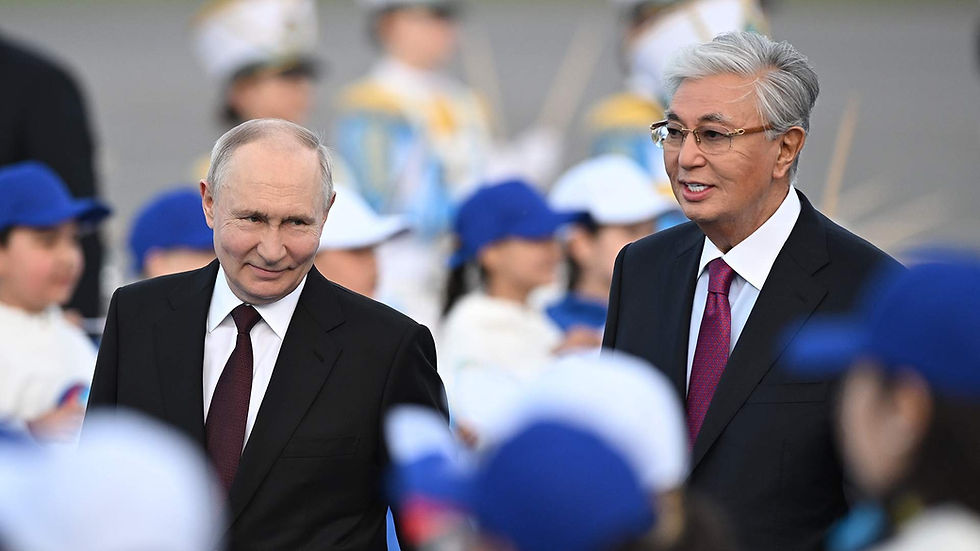
Russia’s president is in Astana for talks that are expected to lock in major energy and transit arrangements — including steps toward Kazakhstan’s first nuclear power station and a planned rise in Russian oil shipments to China through Kazakh pipes.
Vladimir Putin’s state trip has taken on a policy-driven tone, with Moscow and Astana teeing up what officials say will be concrete accords on a Russian-built nuclear plant and credit terms to fund it. The visit, Mr. Putin’s second formal call to Kazakhstan in this presidential term, was presented by the Kremlin as proof of unusually close ties. Ahead of the meetings, the Russian leader published a long essay in Kazakh outlets outlining priorities for cooperation on nuclear technology, hydrocarbons and transport links across Eurasia.
The nuclear project figures as a central deliverable. For Kazakhstan — the world’s largest uranium producer — building reactors is both a technical and strategic move: it addresses rising domestic electricity demand and aging power systems, while creating decades-long dependencies around fuel shipments, engineering support and workforce training. Russia’s state nuclear company, Rosatom, is slated to take a leading role, a choice that would anchor Russian technical presence in the region even as Moscow faces growing diplomatic isolation elsewhere. “This isn’t just about kilowatts,” said a regional energy analyst in Almaty. “It’s about supply chains and downstream influence that last generations.”
Astana frames the plan as a pragmatic response to energy needs rather than an ideological alignment. Officials point to the lack of homegrown nuclear generation despite abundant uranium reserves and stress the desire to bolster resilience and diversify delivery routes, not pick a single patron. Still, any reactor deal typically entails long-term commitments on fuel, spare parts and operating know-how — ties that could complicate Kazakhstan’s ability to shift partners years from now.
Hydrocarbon transit is equally on the table. Negotiators are discussing a proposal to lift annual Russian crude flows through the Atasu-Alashankou route from 10 million to 12.5 million tons — roughly a one-fourth increase — a move Moscow hopes will accelerate its pivot to Asian buyers after losing much of its European market. Data from Kazakh pipeline operators show heavy use of this corridor: nearly 832,000 tons moved through it in April, and about 2.5 million tons in the first quarter. More than four-fifths of Kazakhstan’s oil exports already travel over Russian soil and through the Caspian Pipeline Consortium’s facilities, meaning Astana’s export security remains tightly linked to its northern neighbor. Russia also remains an important supplier of refined fuels to Kazakhstan during seasonal shortages or refinery work, underscoring the two countries’ practical interdependence.
Taken together, the energy deals point to a new pattern in which Russian supply, Kazakh transit capacity and Chinese demand form a mutually reinforcing chain with regional consequences. That arrangement could raise Astana’s profile as a logistics hub, but it also brings risks: deeper integration with Moscow’s energy networks may limit Astana’s maneuverability, while closer ties to Chinese markets could shift bargaining power eastward. A Eurasia specialist at a London think tank cautioned that the emerging structure will likely lock in partners for decades and reshape bargaining between capitals.
The timing of the visit adds political weight. Talks coincide with an economic summit in Astana for the regional bloc, where fissures among members have surfaced and some leaders were notably absent. Kazakhstan continues to court multiple capitals — keeping ties with Moscow, Beijing, Europe and others — and officials describe the move toward closer energy cooperation as transactional rather than ideological. Still, the agreements expected to be signed during this trip will have long-term implications for Kazakhstan’s sovereignty over its energy system and for Russia’s ability to maintain influence in Central Asia despite international pressures.


Comments