Regional Leaders Urge Afghan Integration Into Trade Routes, Stop Short Of Specific Plans
- Andrej Botka
- Jun 11
- 2 min read

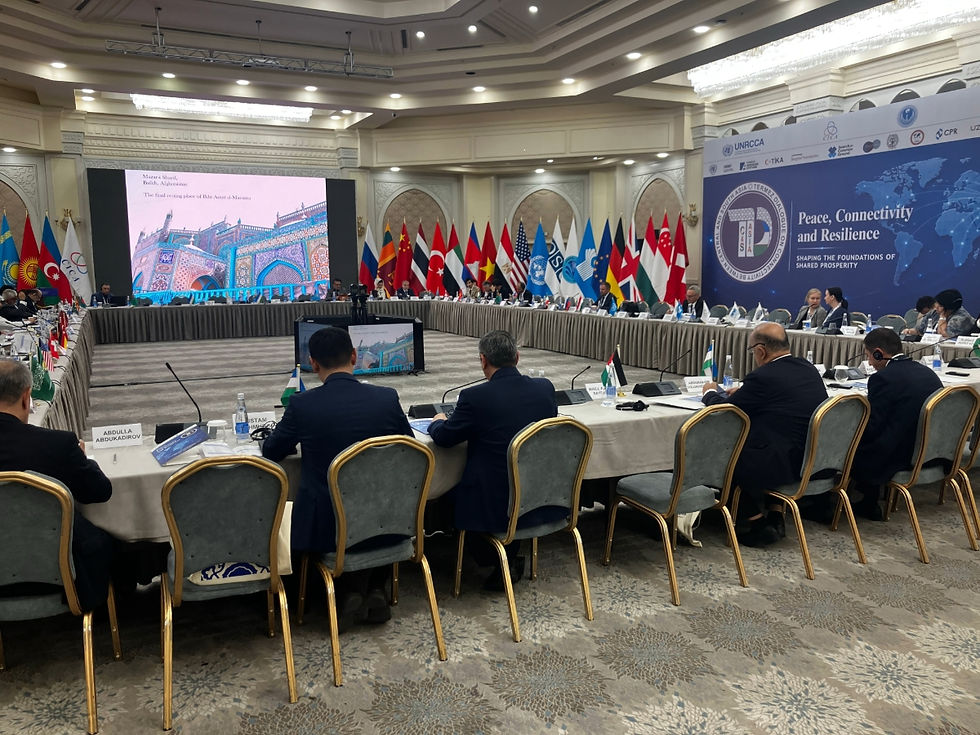
Afghanistan Framed As Transit Hub And Stability Booster During Tashkent Talks; Sanctions, Recognition and Finance Remain Obstacles
TASHKENT — Senior officials from countries across Central and South Asia met June 4 under the Termez Dialogue banner and reached near-universal agreement that Afghanistan needs to be folded into regional commerce networks, even as they left most operational details unresolved.
Delegates said Afghanistan offers the shortest land corridor for several Central Asian states to reach international ports, and they argued expanding commerce could reduce drivers of violence that have haunted the country for decades. Uzbekistan’s first deputy foreign minister, Bakhromjon Aloev, told attendees that a more active Afghan economy would lessen incentives for conflict and yield broader regional benefits.
In recent months, Uzbekistan and neighboring governments have pursued commercial ties with Afghan counterparts. Officials reported contractual commitments between public and private actors amounting to roughly $5 billion since late 2025. Still, lack of formal recognition for the current Kabul administration and a web of international sanctions — along with restricted banking channels — have constrained efforts to scale up freight lines, road links and rail projects that would underpin cross-border trade.
Afghan ministers and business representatives used the Tashkent gathering to press for targeted relief. Nooruddin Azizi, Afghanistan’s industry and commerce minister, reiterated plans to expand logistics capacity, while the chairman of the country’s chamber of commerce, Syed Karim Hashemy, urged partners to carve out exemptions so nonpolitical traders can transact more freely. Hashemy argued that private businesses account for roughly seven out of every 10 economic activities in Afghanistan and urged changes to banking rules that currently block routine trade payments.
Brussels signaled little appetite for a swift policy shift. Eduards Stiprais, the European Union’s special envoy to Central Asia, said the EU remains cautious about providing large-scale aid until governance concerns are addressed, a stance that makes major projects such as a trans-Afghan rail link unlikely to secure European funding in the near term. At the same time, several regional diplomats told reporters off the record that some capitals now find Kabul a more predictable bargaining partner than elements of the previous, U.S.-backed administration — saying the movement negotiates hard but tends to honor pacts once made.
The Termez Dialogue itself traces to a 2022 U.N. resolution that called for practical transport and connectivity measures across Central and South Asia. Analysts at the meeting and afterward suggested incremental steps that could move the needle: narrow exemptions for trade finance, pilot customs and transit corridors, and multilateral projects tied to strict oversight. But for now, officials say, cooperation is advancing in fits and starts — driven more by immediate commercial need than by a shared roadmap for long-term integration.


Comments