Rubio’s Short Trip to Yerevan Bolsters Pashinyan Ahead of Vote
- Andrej Botka
- May 28
- 2 min read

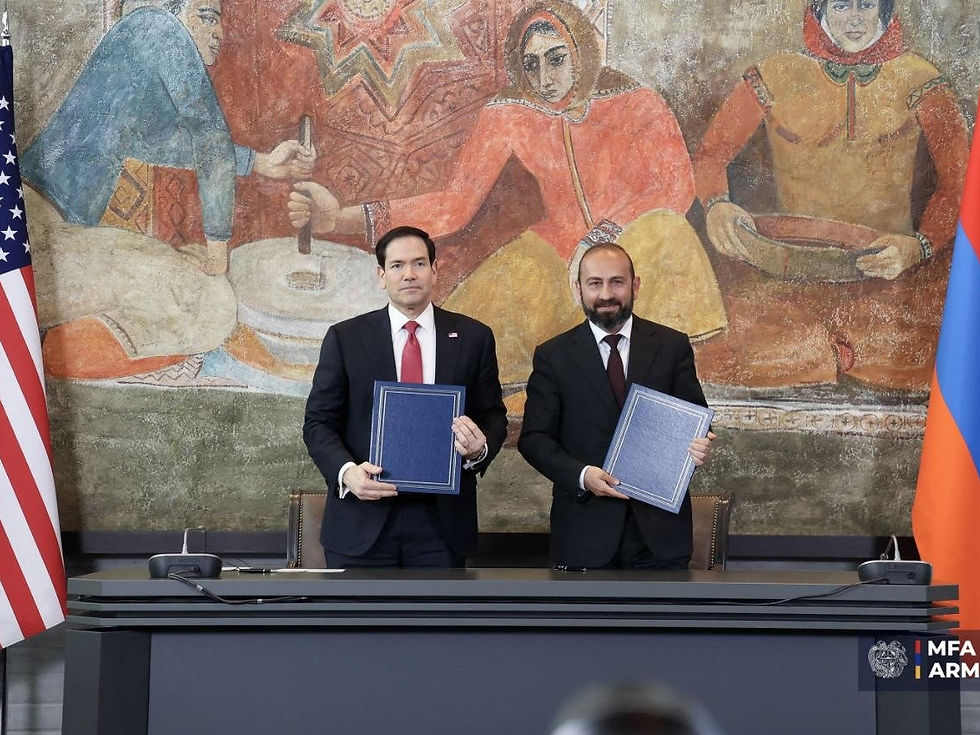
U.S. Secretary of State Marco Rubio’s brief stop in Yerevan on May 26 and the signing of a pair of agreements with Armenian officials offered Prime Minister Nikol Pashinyan a timely foreign-policy endorsement as his government heads into a June 7 parliamentary election. The accords — described by Armenian officials as a broad partnership charter and a framework tied to the so-called “Trump Route,” a component of the Middle Corridor trade plan — mostly formalize existing understandings, but they serve as a visible sign of Western backing for Pashinyan’s push to reorient Armenia away from Moscow.
Rubio and Foreign Minister Ararat Mirzoyan signed the documents in a short ceremony, while Armenian and U.S. aides framed the move as strengthening cooperation on trade, transit and regional stability. The Trump Route framework, linked to the provisional Armenia-Azerbaijan agreement brokered in Washington last August, is aimed at expanding transportation links across the South Caucasus; observers say the recent paper work offers political symbolism more than immediate new policy measures.
Yerevan’s leadership has made clear it wants the visit to register with voters. Mirzoyan asserted the ties with Washington were deepening and suggested the partnership would help spur economic gains. A Western foreign-policy analyst, speaking on background, said the trip was primarily designed to signal continued U.S. support for Pashinyan’s Western-leaning agenda rather than to deliver quick, tangible benefits. Such signaling can matter in a tight campaign, the analyst added, but it won’t replace concrete investment or market access.
On the campaign trail, Pashinyan has promised that, if re-elected, his government will pursue visa-free travel with the European Union within 24 months and move fast to fix domestic problems. He has outlined four priority areas for that effort: expanding trade in goods and services, increasing labor mobility, strengthening financial ties and ensuring smoother transit routes for cargo. Supporters say those steps could modernize Armenia’s economy; critics question how quickly results could be achieved.
Moscow, meanwhile, has stepped up pressure. In recent weeks Russian authorities have blocked imports of several Armenian exports — notably flowers, fruit, brandy and bottled water — a measure Kremlin officials linked to what they described as unfriendly steps by Yerevan. The trade curbs are part of a broader campaign by pro-Russian forces to undercut Pashinyan politically; his opponents on the ballot argue Armenia should preserve its traditional security and economic links with Russia.
As the June vote approaches, analysts say the U.S. visit may sway undecided urban and pro-Western voters, but economic retaliations from Moscow could influence households that rely on export earnings. The coming weeks will test whether diplomatic gestures translate into voter confidence and whether Yerevan’s westward tilt can withstand Russian pushback.


Comments