Tajik Researchers Find Pamir Glacier Losing Snow Even Above 5,000 Meters
- Andrej Botka
- May 21
- 2 min read

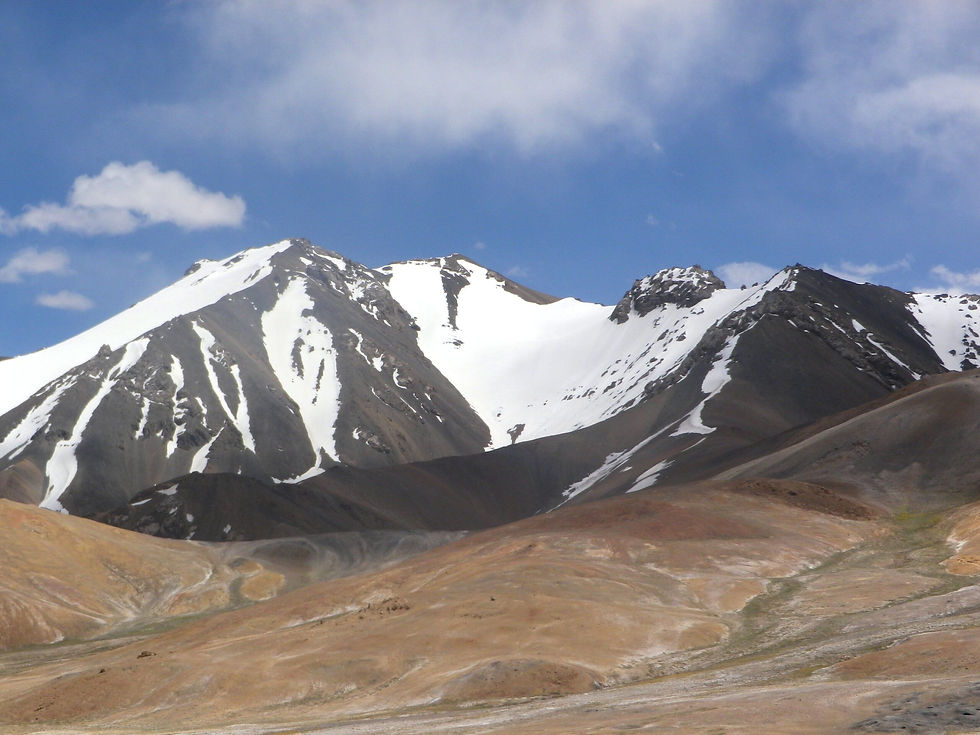
Tajik scientists who carried out the country’s first winter field survey of a Pamir glacier since independence say they recorded worrying losses of snow and ice at altitudes once thought safe from rapid melt. The May 6-15 expedition to Glacier No. 457 in the upper Nukhchashma (Tokuzbulak) basin, a tributary of the Gunt River, showed that the glacier is shedding mass high in its catchment, a development that could tighten water supplies for nearby villages and downstream irrigation and hydropower systems.
Teams from the Mountain Societies Research Institute at the University of Central Asia and the National Academy of Sciences’ glacier research center carried out the work under a United Nations cryosphere initiative running through 2034. Their stated goal was to measure winter mass balance by recording how much snow accumulates, how compact it becomes and how it is spread across the ice surface — data that have been largely absent during winter seasons in Tajikistan until now.
Scientists said the findings were stark. Annual monitoring that began in 2020 has documented a loss of more than one meter of ice thickness on Glacier No. 457, and researchers report that seasonal snowcover in the upper accumulation area above 5,100 meters has nearly vanished over the past five years. “Winter gains used to offset melt farther down,” said Denis Samyn, a UCA earth sciences researcher, in a new interview. “Now those gains are disappearing, so the glacier is losing mass even before summer melt is factored in.”
Fieldwork was done in demanding conditions: teams worked near 5,000 meters amid sudden storms, strong winds and periods of zero visibility. The scientists dug five snow pits between 4,790 and 5,012 meters to measure depth and density and to estimate stored water in the snowpack. Those on-site records fill gaps left by summer-only expeditions and by satellite observations that can’t fully capture winter layering and compacting processes.
Other international projects in the Pamirs have been racing to document climate records as glaciers change. Separate teams have drilled deep cores on nearby caps to preserve long-term climate indicators before they are altered by warming. Local researchers say the new winter data from Glacier No. 457 will be shared with regional water managers and will be used to refine models of meltwater timing and volume across the basin.
Researchers and local water managers say the evidence points to the need for more regular winter monitoring, better early-warning systems and investments in storage and irrigation efficiency. “This dataset gives us a clearer picture of what communities downstream might face,” said Hofiz Navruzshoev of the National Academy of Sciences. “If winter supply doesn’t return, planning for reduced glacier runoff has to start now — and on a scale that matches the problem.”


Comments