Tokayev, U.S. Development Chief Discuss DFC Office and Push Into Minerals, AI
- Andrej Botka
- Jun 18
- 2 min read

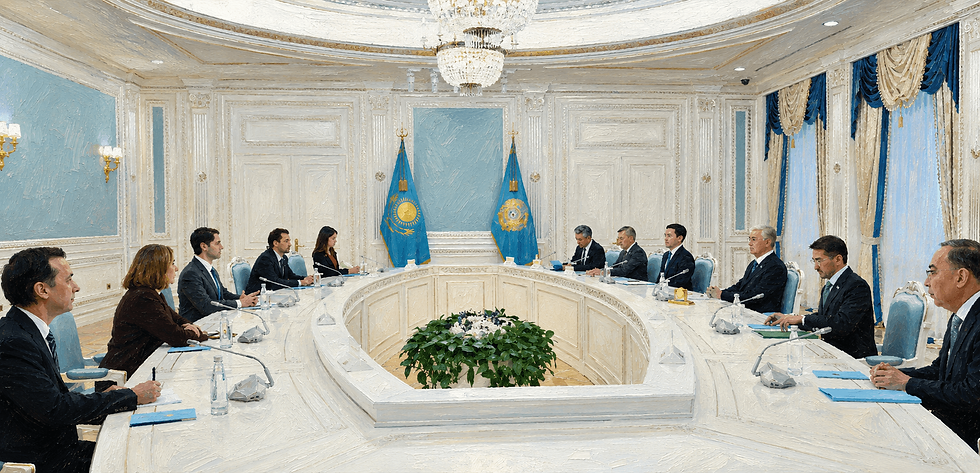
Kazakh President Kassym-Jomart Tokayev met June 15 with Ben Black, chief executive of the U.S. International Development Finance Corporation, to discuss a possible permanent DFC office in Astana and cooperation across critical minerals, transport links, agriculture, digital projects and artificial intelligence. The talks are part of Astana’s bid to turn recent diplomatic contacts with Washington into tangible investment and technology partnerships.
A DFC footing on the ground would give American backers and Kazakh planners a closer route to structure and fund priority ventures. Tokayev framed the meeting as a follow-up to agreements reached during his November 2025 visit to Washington and said ties with the United States have strengthened since President Donald Trump resumed office. “We want commitments made in capitals to become concrete activity here at home,” he told visiting officials, noting Kazakhstan’s push to broaden its economy beyond raw exports.
The U.S. development arm, which mobilizes private capital to advance U.S. foreign-policy and development goals, has been active in region-wide talks. Earlier in June Washington hosted a C5+1 discussion in Astana on strategic minerals, where U.S. envoys described Central Asia as a partner in diversifying global supplies and flagged the financing agency’s potential role in mining, telecoms and Trans-Caspian infrastructure projects.
Those conversations continued at the Astana Mining & Metallurgy Congress on June 11-12. U.S. Commerce Department officials said the focus is shifting from talk to implementation, and the American contingent included nearly two dozen company representatives and senior government figures, highlighting rising commercial interest in Kazakhstan’s extractive and industrial sectors.
Kazakh officials say the goal is value-added development: not only to export ore but to build domestic processing, attract technology transfers and expand higher-end manufacturing. Local analysts argue that linking mineral development with improved transport corridors and AI-driven processing could create more skilled jobs and retain a bigger share of revenue inside the country. “Processing here changes the whole economics,” a Kazakhstan-based economist familiar with government plans said.
Black described his meetings with Kazakh business leaders as productive and said the DFC is weighing what a permanent presence would mean for deal timing and risk management. “We’re looking at ways to speed up financing for projects that fit both U.S. and Kazakh priorities,” he said, adding that any office would aim to make it easier to move agreements from paper to projects.
For Washington, a DFC base in Kazakhstan would signal a more formal economic footprint as powers compete to influence supply chains and transit routes. For Astana, the key test will be whether American financing and know-how can be converted into long-term investments, technology partnerships and concrete projects on the ground. Officials on both sides signaled follow-up talks are planned to turn discussions into specific proposals.


Comments