U.S., Uzbekistan Sign Deal To Boost Direct Business Links
- Andrej Botka
- Jun 18
- 2 min read

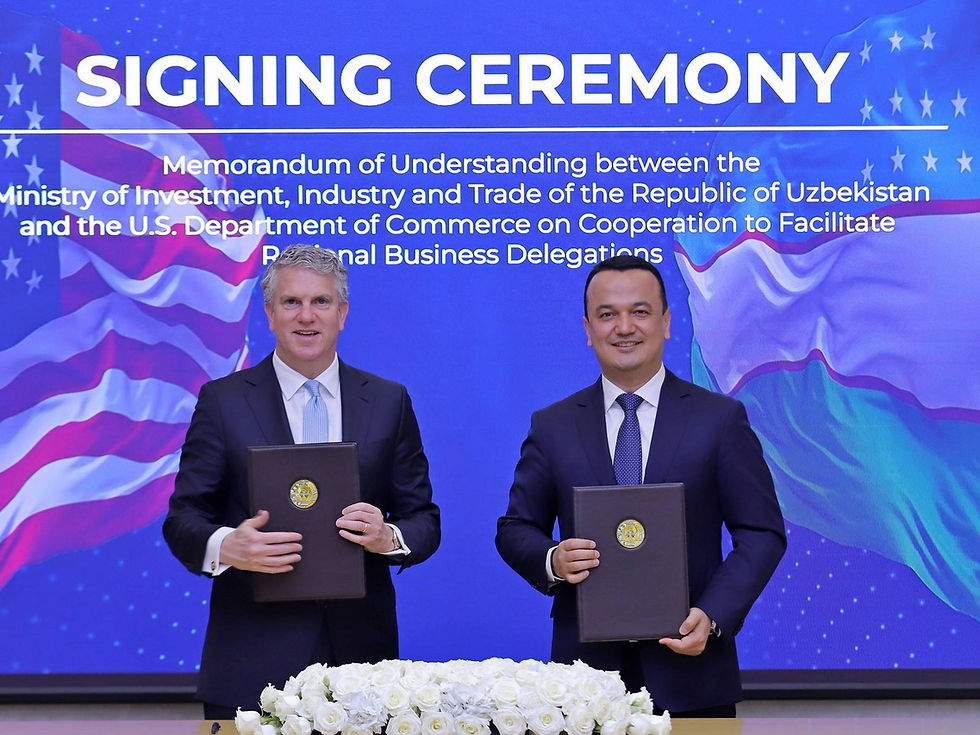
U.S. and Uzbek officials on June 9 in Tashkent endorsed a memorandum intended to deepen commercial ties by making it easier for companies from both countries to meet, negotiate and invest. The agreement, signed by U.S. Assistant Secretary of Commerce David Fogel and Uzbek Minister of Investment Laziz Kudratov, targets expanded activity in extractive industries, energy, software and digital services, agriculture and artificial intelligence.
The memorandum lays out steps to organize business delegations and highlight investment openings, aiming to turn interest into actual projects and contracts rather than remaining at the discussion stage. A semi-official domestic outlet described the move as a shift toward technology and capital flows, away from a focus on commodity trade, and said the pact creates practical channels for follow-up visits and dealmaking.
Before the ceremony, Fogel held talks with Saida Mirziyoyeva, the president’s daughter and chief of staff. In a Telegram post afterward, she said U.S. firms have shown growing curiosity about infrastructure and investment in Uzbekistan and urged that that curiosity result in concrete agreements, employment and broader economic benefits for ordinary people.
Observers link the agreement to goals set at a February gathering of Central Asian business leaders in Bishkek under the B5+1 process, the private-sector counterpart to the C5+1 diplomatic forum. “If implemented well, this could give small and mid-size Uzbek firms more access to foreign partners,” said Nadia Karimova, an economist at a Tashkent university. But she added that regulatory hurdles and the need for clearer contracting safeguards remain concerns.
Bilateral trade between the two countries reached roughly one billion dollars last year. And in late 2025, President Shavkat Mirziyoyev unveiled an ambitious proposal that he said could attract up to one hundred billion dollars of U.S. investment over the next 10 years — a target analysts describe as possible but dependent on major policy and institutional reforms.


Comments