Armenian Leader Urges Stronger Climate Action at Astana Gathering
- Andrej Botka
- 23 апр.
- 2 мин. чтения

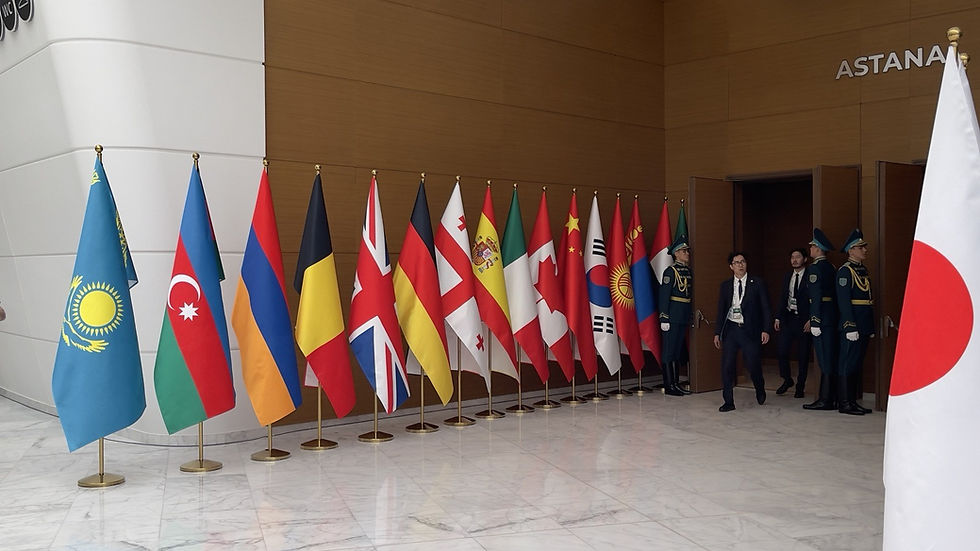
Armenian President Vahagn Khachaturyan pledged deeper emissions cuts, unveiled Yerevan as the host for COP17 on biodiversity and called for regional water cooperation at the Regional Ecological Summit held in Astana over Earth Day.
Astana, Kazakhstan — Speaking at the Regional Ecological Summit, Khachaturyan framed climate change and diminishing biodiversity as immediate threats to Armenia’s people and landscapes, and he urged partners to move from talk to coordinated measures. He thanked Kazakh authorities for staging the three-day meeting under President Kassym-Jomart Tokayev’s patronage and praised the assembly as a place where governments, scientists and civic groups can coordinate action — though he warned action must follow the discussion.
Khachaturyan outlined Armenia’s climate targets, saying Yerevan will cut its greenhouse gas output by roughly 11/25 of 1990 levels through domestic programs by 2035, and that the goal rises to about 13/25 if international assistance is secured. He also stressed that Armenia’s contribution to global emissions is tiny — roughly one five-thousandth of the world total — yet the country already feels pronounced warming. He cited a temperature rise of more than one degree Celsius over recent decades and warned that trend is likely to continue into midcentury, bringing more floods, droughts and mounting pressure on mountain water sources.
The president singled out threats to biodiversity and announced that Yerevan will host the 17th meeting of the parties to the Convention on Biological Diversity in October, a move aimed at raising Armenia’s profile in conservation diplomacy. “We want this conference to assess progress and speed up efforts to restore damaged ecosystems,” he said, inviting governments and experts to participate. He also welcomed Kazakhstan’s plan to lead talks on shared water management and confirmed Armenia will engage in those consultations.
Local experts at the summit noted the political logic behind Armenia’s agenda. Dr. Ani Petrosian, an ecologist at a Yerevan university, observed that hosting COP17 gives a small country a louder voice on nature protection while underscoring how climate stress is already undermining rural livelihoods. Analysts at the meeting pointed out that pledges will hinge on accessing finance and technology from wealthier nations, and that pledges without funding risk remaining aspirational.
Khachaturyan closed by stressing cooperation on finance, know-how and clean-technology transfers, and by offering Armenia’s own experience for regional work on resilience. The summit continues through April 24, concentrating on climate resilience, biodiversity conservation and sustainable development strategies for Central Asia and neighboring states.



Комментарии