Central Asian States Urged To Shift From Big Dams To Renewables And Small Reactors To Close Power Shortfall
- Andrej Botka
- 30 апр.
- 2 мин. чтения

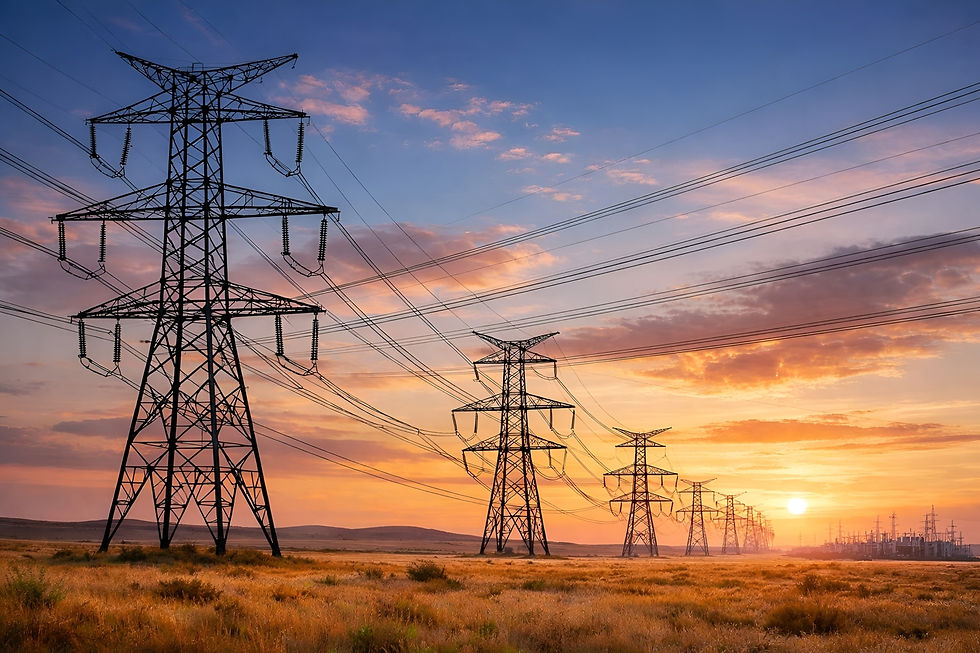
Central Asian governments should reduce reliance on large hydropower projects and accelerate deployment of wind, solar and small modular nuclear reactors to meet rising electricity demand, a Washington think tank warned in a report released April 23. The New Lines Institute for Strategy and Policy says Kazakhstan, Kyrgyzstan, Tajikistan and Uzbekistan are pursuing electricity-hungry economic plans — from data centers to AI facilities — but lack the generating capacity now and on the near-term horizon.
The report points to two converging pressures pushing the region toward an energy crunch: strong population growth and shrinking water supplies. For about three-quarters of a century, river-driven power plants supplied much of Central Asia’s electricity. But declining river flows and competing needs for irrigation make it harder to rely on more dams. The authors say adding non-hydro capacity quickly will be essential if national development strategies are to succeed.
Soviet-era institutions once managed interregional electricity flows, but that centralized coordination frayed after independence and has largely failed to adapt to the contemporary balance of seasonal needs. Upstream countries — notably Kyrgyzstan and Tajikistan — depend on spring and winter flows to run turbines, while downstream states including Kazakhstan, Turkmenistan and Uzbekistan draw water for summer crops. Today, the system functions more through short-term agreements than a binding regional framework, and the transmission network itself remains only partly interconnected.
Governments have announced ambitious buildouts of generation capacity, yet the report cautions that the gap between plans and delivery is wide. Financing setbacks and technical hurdles have already slowed projects in Kazakhstan, delaying refurbishments and new plants, and monetary obstacles threaten proposed nuclear programs in Kazakhstan and Uzbekistan. Simply put, the report says, intended capacity increases may not arrive on schedule without clearer funding and logistical paths.
NLI recommends that policymakers curb plans for additional large-scale dams — singling out proposals like Tajikistan’s Rogun and Kyrgyzstan’s Kambarata-1 — and instead fast-track wind and solar, which the authors argue can be added quickly and with lower greenhouse gas consequences. The study also advocates for small modular reactors rather than massive conventional nuclear stations, calling SMRs cheaper and faster to assemble, less water-dependent and better suited to dispersed demand centers. An independent energy analyst who reviewed the report said governments face trade-offs between long-term hydropower ambitions and the need for reliable, drought-resilient supply that can support new digital industries.
Eurasianet, which cooperated on the study and helped prepare the material, has an operating agreement with the New Lines Institute. Eurasianet staff assisted in drafting the analysis, the report notes, while stressing that implementation will hinge on regional political coordination and access to financing that currently remains uncertain.


Комментарии