China’s Q1 Trade With Central Asia Shows Mixed Moves, Kyrgyzstan Bears The Brunt
- Andrej Botka
- 30 апр.
- 3 мин. чтения


China’s trade with Central Asian countries shifted unevenly in the first quarter of 2026: overall commerce with the region rose, but several governments saw surprising downturns in bilateral activity, led by a sharp fall in Kyrgyz trade, official customs data show. Total trade between China and the five Central Asian states climbed from $21.3 billion in the same quarter last year to $24.6 billion this year — roughly an increase of one-sixth — even as Kyrgyzstan’s reported turnover fell from $6.1 billion to just under $4 billion. Turkmenistan edged down slightly, while Kazakhstan, Uzbekistan and Tajikistan all recorded sizeable gains.
The composition of flows also changed. China exported about $15.1 billion to Central Asia in Q1 2026 and imported roughly $9.5 billion, narrowing the gap from the previous year when exports ran about $13.8 billion against $7.5 billion in purchases. Kazakhstan reversed a longstanding deficit, selling $6.8 billion to China while importing $6.4 billion in the quarter, compared with about $3 billion in exports and $6 billion in imports a year earlier.
In Kazakhstan, a wave of proposed Chinese investments and commercial agreements signal tighter economic ties beyond simple trade figures. Beijing-linked firms have lined up projects ranging from a planned $500 million chromium-processing facility in Aktobe to a registered mining subsidiary targeting at least $150 million in spending. Energy and green projects include a 500-megawatt wind farm project with an estimated $645 million price tag and a roughly $180 million waste-to-energy initiative near Astana. Agricultural processing and auto assembly deals — including a proposed $200 million potato plant and arrangements to assemble GAC vehicles locally — accompany a rise in Kazakh firms approved to ship feed meal to China, from 27 to 46 companies. Tencent’s purchase of a small stake in a leading Kazakh fintech firm and university research partnerships add a governance and tech angle to the economic picture.
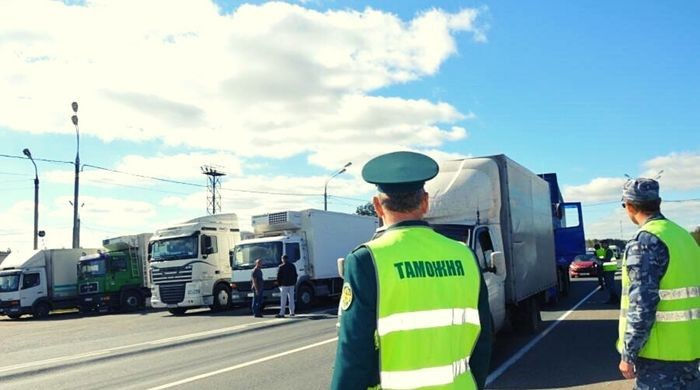
Kyrgyzstan’s plunge was driven largely by a collapse in reported exports to China and a surge in imports. Exports fell to about $38 million in Q1 2026 while imports accounted for virtually all of the nearly $4 billion in bilateral trade. Separately, construction is underway on a $260 million fertilizer factory in the Osh region by a Chinese fertilizer company, a project Kyrgyz officials say should reduce vulnerability to global supply disruptions. Vehicle imports from China jumped sharply — 32,485 units in Q1 2026 versus 10,995 a year earlier — and border officials from Kyrgyzstan and Xinjiang have agreed to step up liaison staffing and measures to ease congestion at crossings.
Smaller states reported a mix of diplomatic and commercial activity. Tajikistan hosted a Chinese-Tajik investment working group meeting and received Chinese technical seminars on governance and water systems; the government reported doubled exports to China in the quarter but imports still exceeded shipments. Turkmenistan’s intergovernmental talks with a visiting senior Chinese official produced agreements across energy, transport, science and culture, and Ashgabat inaugurated its first Luban vocational workshop. In Uzbekistan, the state oil firm signed a contract for 30 exploration wells to be drilled over two years, while official-level political and science-technology meetings took place; regulators also moved to halt distribution of several toy lines from China over safety concerns.
Analysts say the mixed results reflect both transitory and structural factors. A regional trade specialist at a Central Asian think tank noted that sudden spikes in commodity shipments and one-off contracts can mask slower, underlying shifts in supply chains and transit logistics. He added that rising Kazakh exports likely reflect strong flows of energy and mineral products, while Kyrgyz data may be distorted by reclassification or by a shift in transit routes. Policy choices, infrastructure bottlenecks and the sequencing of large projects will probably determine whether the pattern seen in Q1 represents a temporary wobble or the start of a longer trend.


Комментарии