Iran Offers Military Support To SCO Partners At Bishkek Defense Meeting

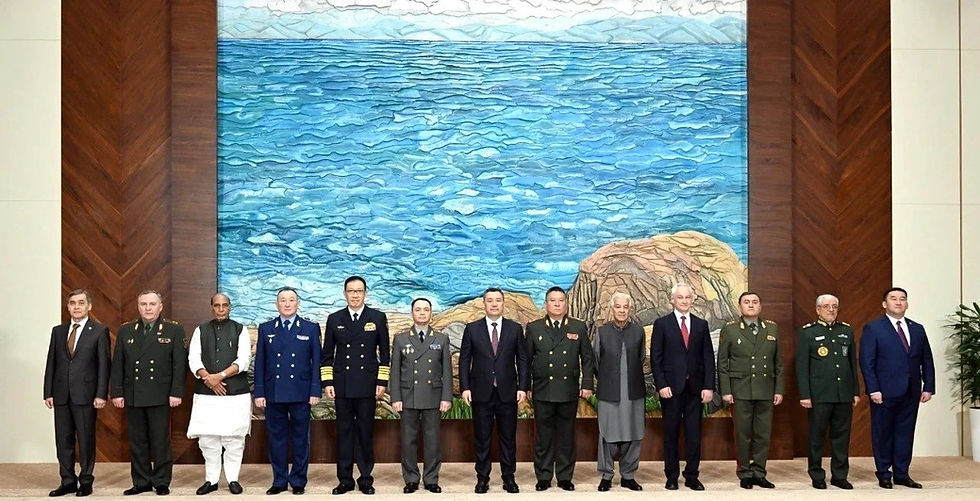
Iran told fellow members of the Shanghai Cooperation Organization it is prepared to transfer military know-how and hardware during a defense ministers’ gathering in Bishkek, a move that could reshape security ties across Central Asia as governments navigate recent clashes in the Middle East. The declaration came at a meeting on April 28 chaired by Kyrgyzstan’s defense minister and attended by SCO Secretary-General Nurlan Yermekbayev, with Iran represented by Deputy Defense Minister Reza Talaei-Nik.
Talaei-Nik said Tehran is willing to provide its defense systems and operational lessons to other sovereign states in the grouping, casting the offer as part of a broader shift in global power arrangements away from dominance by a single superpower. He also framed Iran’s recent actions against U.S. and Israeli forces as a source of practical lessons that other capitals might find useful when reassessing their own security postures.
The offer followed weeks of exchanges that included Iranian drone and missile strikes on U.S. bases and on Israeli targets, and counterstrikes that raised tensions across the region. A truce announced earlier in April eased direct hostilities, but diplomats say negotiations toward a longer-lasting settlement have yet to advance.
The SCO now brings together China, Russia, India, Pakistan, Iran, Belarus and five Central Asian republics — Kazakhstan, Kyrgyzstan, Tajikistan and Uzbekistan — with Tehran having become a full member last year. The organization also counts roughly one dozen and a half countries as dialogue partners or observers, widening the forum’s reach beyond its original border-security focus established in the late 1990s and formalized in 2001.
As host, Kyrgyz President Sadyr Japarov greeted delegations and urged practical cooperation, including combined exercises and closer operational coordination. Defense Minister Ruslan Mukambetov said members must build mutual trust and act together to confront current threats, and he pushed for agreements that would tighten regional defense ties under Kyrgyzstan’s yearlong chairmanship marking the bloc’s 25th anniversary.
On the sidelines, Iran’s deputy minister met counterparts from Russia and Belarus to talk continued collaboration. Analysts say Tehran’s outreach tests the patience of Central Asian capitals that long have tried to balance ties with Moscow and Beijing, deepen trade with China, and keep lines open to Western governments. “This puts pressure on countries that prefer to hedge — they’ll have to weigh whether to accept Iranian support and how that would affect relations with other partners,” said a regional security analyst familiar with the talks.


Комментарии