Kazakhstan Sets August Vote For New Single-Chamber Parliament
- Andrej Botka
- 23 апр.
- 2 мин. чтения

Kazakhstan will hold elections to a newly created single-chamber parliament, the Kurultai, in August 2026, President Kassym-Jomart Tokayev announced April 10. The move ends the country’s long-standing bicameral system and establishes a timeline meant to give political parties months to organize campaigns and voter outreach under the revised rules.
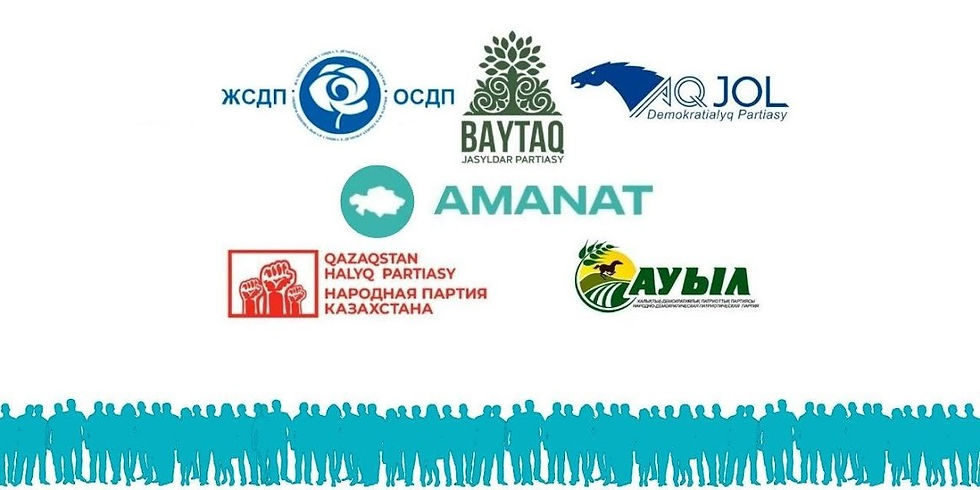
The change follows a series of reforms that began in 2023, when the country shifted to a mixed voting system for the lower house. Back then, 69 deputies were chosen from party lists while 29 came from single-member districts — the latter option has now been removed, though officials have not fully explained the rationale. In the last parliamentary contest, the largest party, Amanat (formerly Nur Otan), took roughly 27/50 of the vote. The other parties that cleared the threshold won about 11/100 (Auyl), 9/100 (Respublica), 9/100 (Aq Jol), 7/100 (People’s Party), and 5/100 (OSDP). Green-leaning Baytaq received near 2/100 and fell short of seats.
Local observers say the 2023 results already showed a clear pattern: Amanat remains the dominant force, buoyed by the presence of many senior officials in its ranks, while other parties have struggled to sustain visibility between elections. Aq Jol has managed to push business-oriented measures more consistently than some rivals, and Baytaq has occupied the environmental niche despite limited traction. Newer formations such as Respublica, launched by young entrepreneurs, have had difficulty converting energy into parliamentary influence. And a prospective eighth party, Adilet, has started registration and is widely viewed by analysts as likely to align with the governing bloc if it qualifies.
Political commentators and some lawmakers argue the broader party system is underdeveloped. The Senate speaker has pointed out that only one party appears to have deep roots across regions, with others active in pockets or largely dormant outside election seasons. Many critics add that, when deputies do raise objections, those moments typically lead to narrow compromises rather than sustained policy shifts. Some analysts suggest that moving to a single-chamber body chosen solely from party lists could, in theory, incentivize parties to build stronger national networks — though others warn it may further distance parliament from local concerns.
Those local concerns are already shaping public reaction. Rural voters who once relied on single-member representatives to press district-specific issues worry the new arrangement will leave them with fewer direct channels to voice grievances about land, water and local services. Urban activists emphasize the risk that environmental and minority issues could be sidelined if smaller niche parties fail to clear the ballot threshold. Political scientist Aigerim Sadykova says parties now face a test: adapt to the list-only rules by strengthening grassroots work, or cede influence to better-resourced rivals.
With months to go before ballots are cast, parties will need to finalize lists, shore up regional branches and sharpen campaign messages. Observers expect some jockeying for position within the pro-government spectrum and a renewed push by smaller parties to prove they can mobilize voters across many regions. For ordinary voters, the real question is whether the Kurultai will change how well their concerns are represented in the national legislature.


Комментарии